
Bringing Medication Into Japan: Documents and Customs Requirements
Know exactly what paperwork you need in under 5 minutes.
Some prescription medications require documentation before entering Japan. Get clear guidance on what paperwork and translations are required before you travel.
Content reviewed against official MHLW and Narcotics Control Department guidance · Last updated 25 August 2026

When Do You Need a Medical Translation in Japan?
You may need a Japanese translation of your prescription, doctor's letter, or medical records whenever documents must be understood by customs officials, clinics, pharmacies, or Japanese authorities. These are the most common situations travellers face.
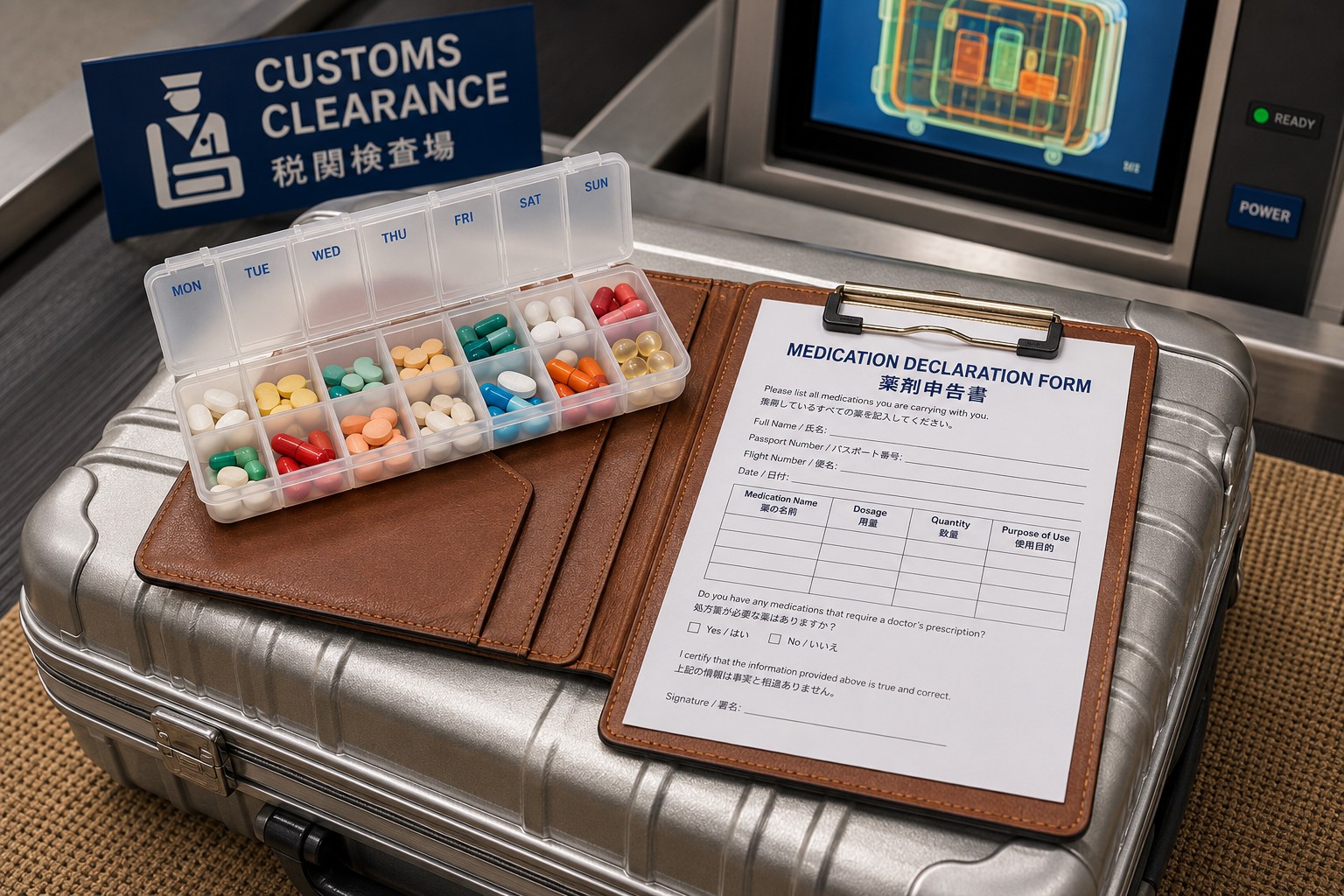
Customs officers may inspect medication on entry. Translated prescription documents can help relevant officials understand what you are carrying and why. Translation is supporting documentation only and does not guarantee clearance, approval or entry of the medication.
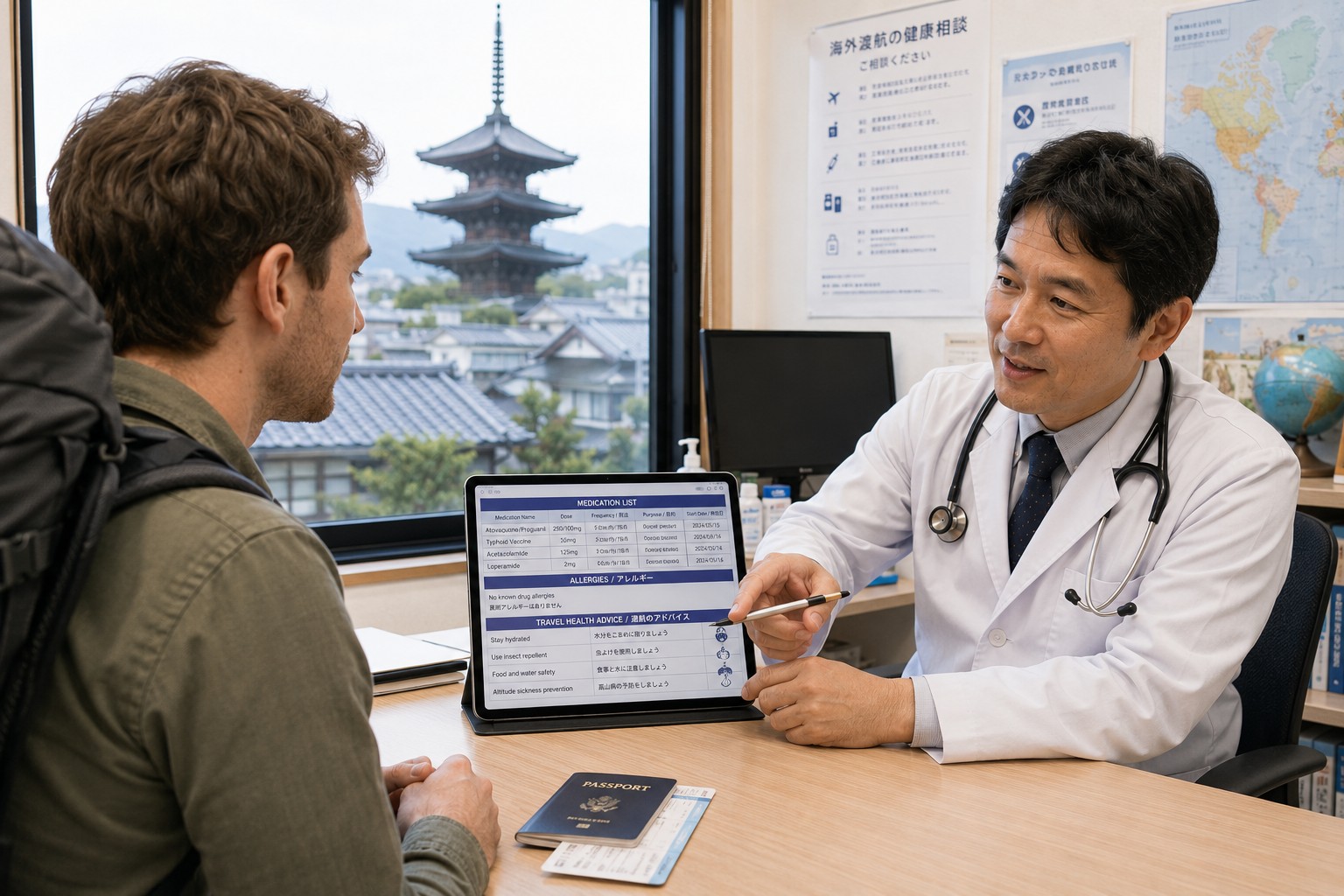
In clinic visits or emergencies, language barriers can delay treatment. Translated medication records help Japanese doctors respond quickly and accurately.
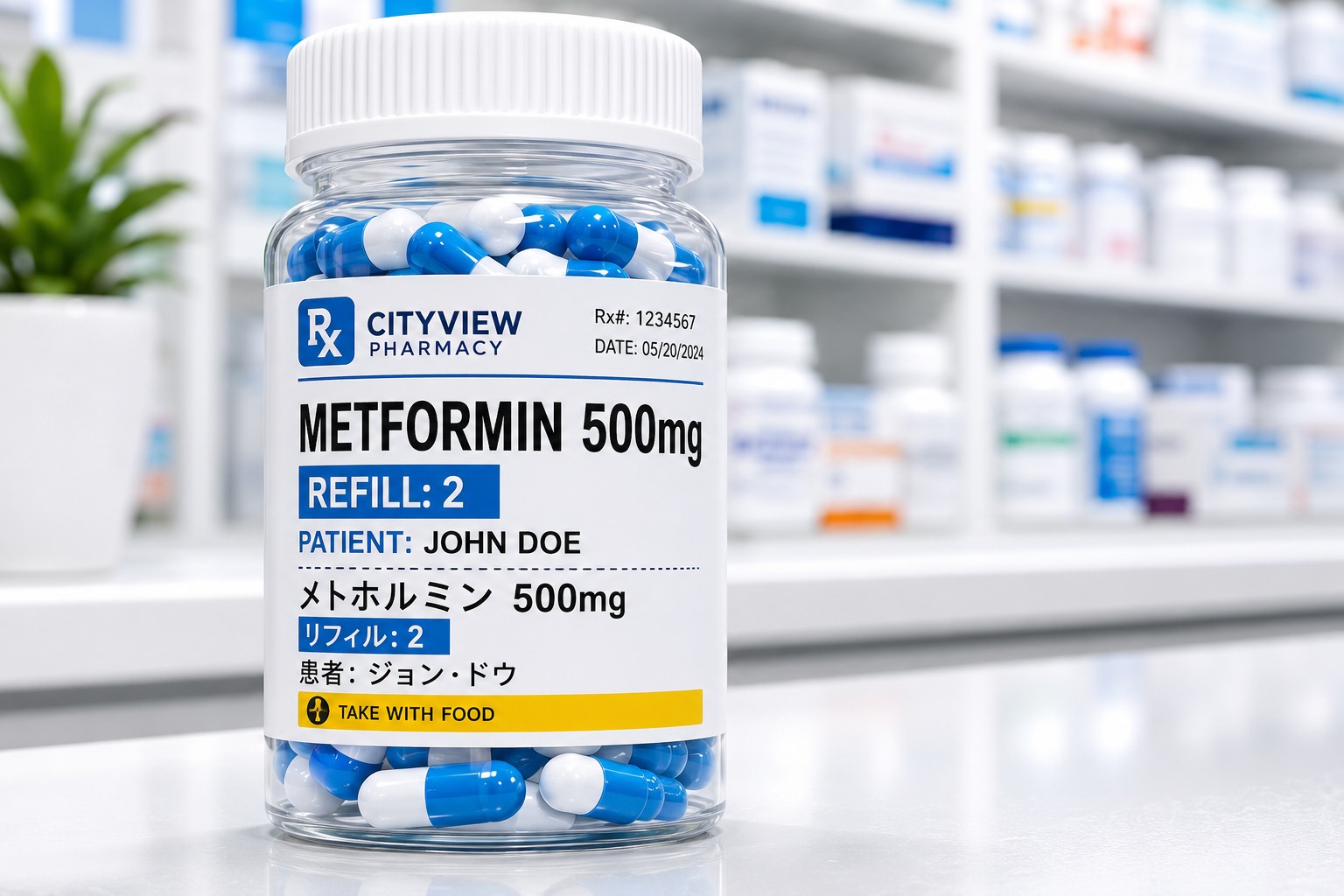
Overseas prescriptions are usually not accepted directly by Japanese pharmacies. Translated records help explain your usual medication when you need a refill.
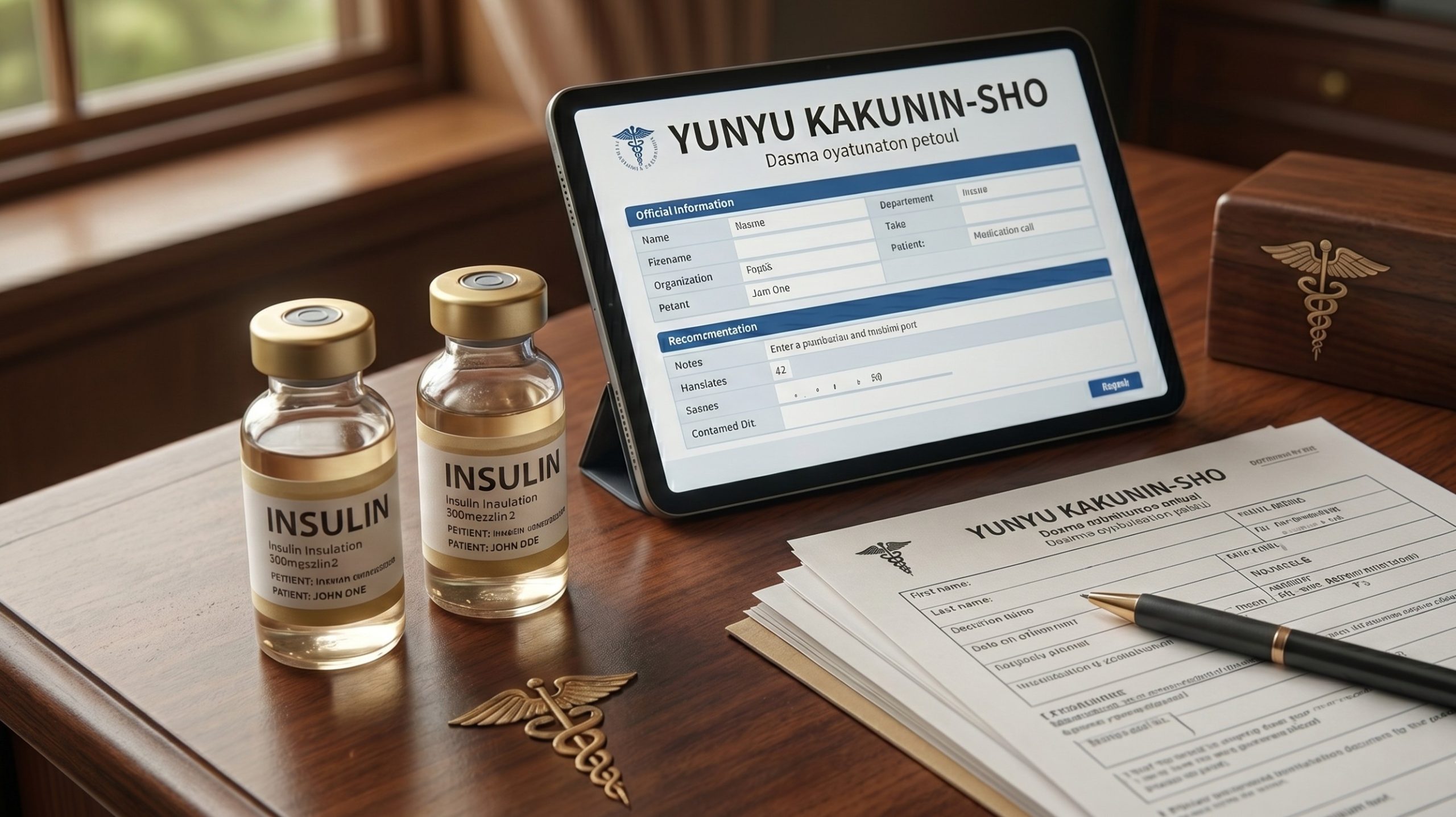
Advance-approval applications may require supporting medical documents to be prepared or translated before Japanese authorities will review them.
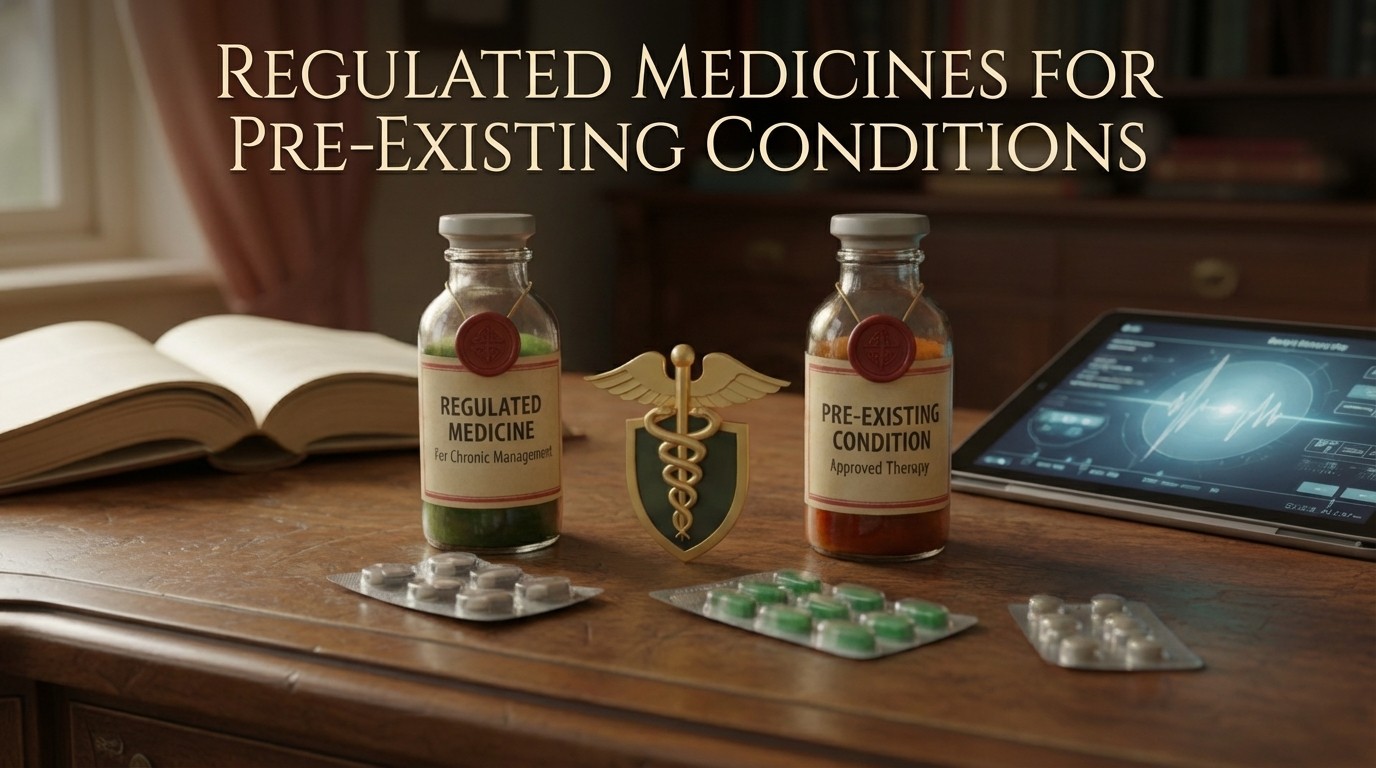
Many medications for ADHD, bipolar disorder, and neurological conditions are tightly regulated in Japan. Without advance checks and translated documentation, treatment can be interrupted unexpectedly.

When insulin or critical medication is lost in transit, replacement delays can become dangerous. Clear, translated documentation can determine how quickly help is available.
Common Medication Types We Assess
Japan's rules focus on the active ingredients in a medication. These are common medication categories travellers ask us about before entering Japan.
Travelling with medication used for ADHD, anxiety, or sleep disorders.
Travelling with insulin, glucose monitors, or diabetes supplies.
Bringing medication that requires syringes, injection pens, or needles, including safe needle-disposal requirements in Japan.
Travelling with multiple prescription medications for long-term health conditions.
Travelling with emergency allergy medication such as an EpiPen.
Carrying medication related to chemotherapy or ongoing cancer care.
Rules for Bringing Medication Into Japan
Japan allows many medicines to be brought into the country for personal use, but the rules depend on the medication type, active ingredient, quantity, and whether the medicine is controlled or restricted. The requirements below reflect guidance published by Japan's Ministry of Health, Labour and Welfare.
Most prescription medications can be brought for personal use in small quantities.
Bringing more than a 1-month supply may require advance approval, known as Yunyu Kakunin-sho.
Some medications, including certain ADHD or anxiety medications, are restricted or prohibited in Japan.
Carry a prescription or doctor's letter, with a Japanese translation if needed.
Restricted medications may be delayed, refused entry, or confiscated if required approvals or supporting documents are not available.
Preparing the Right Documents Before Your Trip
The documents you need depend on your medication, quantity, and whether the medicine requires advance approval.
Bring the original prescription or doctor's letter explaining the medication, dosage, and medical condition.
Prepare a Japanese translation if your prescription or doctor's letter is not written in Japanese.
Apply for a Yunyu Kakunin-sho, also known as a Yakkan Shoumei, if your medication or quantity requires advance approval.
Present your medication and necessary supporting documents to customs officials when entering Japan if requested.
When Do You Need a Japanese Translation?
Medical documents issued outside Japan are usually written in your native language. Japanese authorities, customs officials, doctors, or pharmacists may need a Japanese translation to understand the medication and its purpose.
A translation is likely needed when:
- You are submitting medical documentation as part of a Yunyu Kakunin-sho application
- Customs officials need to understand the medication you are carrying
- You have lost or need to refill your prescription while in Japan
- You need to speak with a doctor or visit a hospital in Japan
Not sure what documents you need?
Use the free assessment tool to check your medication and see what approvals or documents may be required before travelling to Japan. Takes under 5 minutes.
Check My MedicationFree assessment, no account required
4 Simple Steps to Travel to Japan With Medication
Gather your prescription, doctor's letter, medication details, dosage, and travel itinerary.
Use the free assessment tool to understand whether documentation or advance approval may be required.
Request translation, supporting-document guidance and review for customs or Yunyu Kakunin-sho requirements.
Carry translated documents and any required approval documents when entering Japan.
Choose the Support That Fits Your Needs
Select the level of support that best matches your situation and travel requirements.
For travellers who already have translated medical documents, or will handle translation separately, and need procedural guidance, supporting-document templates and review of their completed medication-import paperwork.
- ✓ Supporting-document templates and procedural guidance
- ✓ Step-by-step instructions
Prices and inclusions are subject to our Terms of Use and Commercial Transactions.
Full administrative support with certified medical document translation — everything most travellers need.
- ✓ Everything in Admin Support
- ✓ Certified medical translation
- ✓ Supporting-document templates and translated materials for you to review, complete and submit in your own name
- ✓ Professional document review
Admin Support $180 + one eligible Medical Translation block $120 = $300 separately; the $249 package reflects a $51 bundled saving. Includes up to one started 200-source-word medical translation block where suitable; additional translation and complex cases are quoted separately.
Get the Complete PackagePrices and inclusions are subject to our Terms of Use and Commercial Transactions.
For special cases only: everything in the Complete Import Package plus official legal notarisation for formal requirements.
- ✓ Everything in the Complete Import Package
- ✓ Notarised translation support, where applicable
- ✓ Legal authentication support, where applicable
Complete Import Package $249 + Notarisation add-on $299.
Get Complete + NotarisationPrices and inclusions are subject to our Terms of Use and Commercial Transactions.
Payment is processed in US dollars. MedicTranslate provides translation, supporting-document templates, procedural guidance and review of customer-completed paperwork. Applications, permits and declarations are completed and submitted by you in your own name. MedicTranslate does not prepare or lodge government applications on your behalf or act as your agent before Japanese authorities. We do not provide legal, immigration, customs or medical advice. Japanese import requirements and final decisions are determined solely by the relevant Japanese authorities and may change without notice.
Bringing restricted medication without the correct documentation can result in confiscation, delays at entry, or in serious cases, detention and legal penalties. Final approval rests solely with Japanese government authorities.
Frequently Asked Questions
Answers to the most common concerns travellers have before visiting Japan with medication.
Official Resources
Always refer to official sources
For the most current and authoritative information, always refer to official Japanese government websites before travelling.
This page is informational content prepared by MedicTranslate Co., Ltd. (Kobe, Japan) and reviewed against published MHLW and Narcotics Control Department guidance. Last updated 25 August 2026. It does not constitute legal, immigration, customs, or medical advice.
Assessment Form – Supported Languages
Our free medication assessment tool is available in 13 languages. Select your language to get started.
Free self-assessment, select your language on the platform to get started
Travelling soon? We're here to help.
Check your medication in under 5 minutes.