
Yunyu Kakunin-sho (Import Confirmation) and the Narcotics Control Department Application: Step by Step
The Yunyu Kakunin-sho (輸入確認証, Import Confirmation Certificate) and Narcotics Control Department (NCD) permission are two separate processes in Japan. The Yunyu Kakunin-sho covers ordinary medicines above the personal-use allowance. In contrast, narcotics and stimulant raw materials need advance permission through the NCD. Applying for the wrong one wastes time you may not have.
Quick answer
Use the MHLW Yunyu Kakunin-sho (Import Confirmation) for otherwise permitted medicines above the personal-use allowance (more than one month of prescription medicine or two months of other medicine). Use NCD advance permission for narcotics and stimulant raw materials, applying at least 14 days before travel. Psychotropics follow NCD’s quantity table, with Import Confirmation for injections or more than one month’s supply. New Year 2026–27: earlier deadlines apply. Entry 21 Dec to 4 Jan: documents by 7 Dec. Entry 5 to 11 Jan: by 14 Dec. Entry 12 to 18 Jan: by 21 Dec.
Unsure which application applies? Classify each medicine by its active ingredient before you prepare any forms.
Check my medicationOn this page
Yakkan Shoumei is the old name for the Yunyu Kakunin-sho
From 1 September 2020, the former Yakkan Shoumei (薬監証明) procedure was replaced by the Import Confirmation Certificate (輸入確認証, Yunyu Kakunin-sho). Many travel sites still use the old term, so treat any “Yakkan Shoumei” guidance as referring to Import Confirmation.
From 1 July 2025, online application through MHLW’s Import Confirmation Information System became the general rule for personal-use applications. For more detail on the certificate itself, see our guide to the Import Confirmation Certificate.
Yunyu Kakunin-sho or NCD permission: which process applies?
The deciding factor is the active ingredient, not the brand name. First, check each ingredient’s Japanese legal category; then check the quantity and dosage form.
Ordinary medicines
Needed when an otherwise permitted medicine goes beyond the personal-use allowance: more than one month of a prescription medicine, more than two months of other medicines, or more than 24 units per item of qualifying external-use products.
Narcotics and stimulant raw materials
Permission from the Regional Bureau of Health and Welfare is needed before you travel, whatever the quantity. Products excluded from these classes by concentration, such as pseudoephedrine at 10% or less, follow different rules, so check your exact product with the NCD.
Examples NCD lists: morphine, fentanyl, oxycodone, codeine above 1%, tapentadol (narcotics); lisdexamfetamine, pseudoephedrine above 10% (stimulant raw materials).
Psychotropics
No permission within NCD’s published quantities for non-injection forms. Above those quantities, or for injections, carry a doctor’s certificate. Injections and more than one month’s supply also need Import Confirmation.
Examples NCD lists: methylphenidate, zolpidem, alprazolam, clonazepam, diazepam.
Some stimulants cannot be brought in at all. Amphetamine and methamphetamine remain prohibited for individual travellers. No certificate or permission changes that.
Step by step: applying for the Yunyu Kakunin-sho
- Confirm the medicine is otherwise permittedImport Confirmation does not override a prohibition or a separate controlled-substance law.
- Identify why Import Confirmation is neededQuantity above the allowance, a psychotropic injection, or another MHLW trigger. Name it accurately.
- Apply through MHLW’s online systemThe Import Confirmation Information System is the general route for personal-use applications.
- Enter each product accuratelyUse the active ingredient, strength, dosage form and total quantity, not the brand name alone.
- Upload the supporting evidence requestedThis may include a prescription, doctor’s letter, product information and travel details.
- Keep the issued certificate with the medicineHave it available for customs inspection when you arrive.
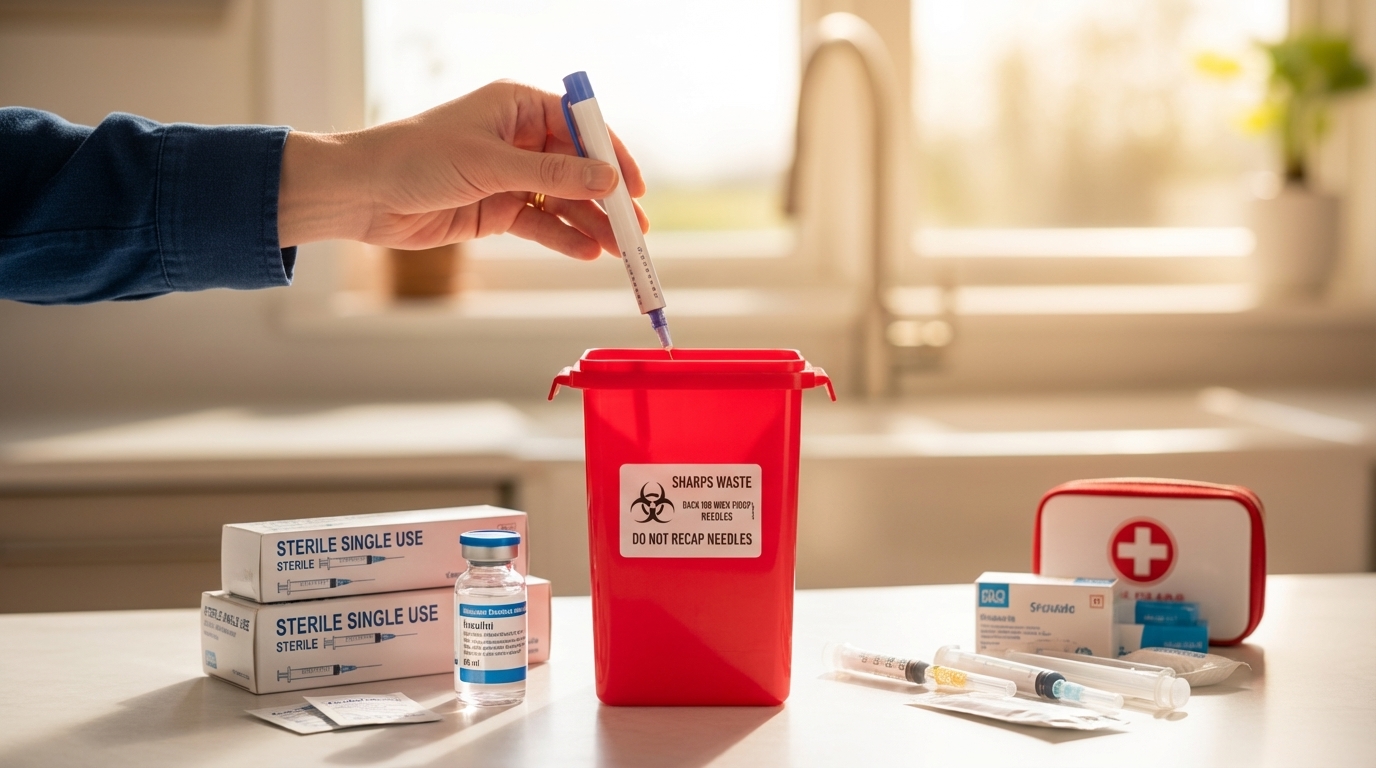
Injectable allowance: up to one month of an otherwise permitted injectable supplied as a pre-filled syringe or self-injection kit does not need Import Confirmation. However, syringes or devices brought separately, and psychotropic injections, are not covered.
Step by step: the Narcotics Control Department application
- Confirm the controlled categoryNarcotic and stimulant-raw-material lists are ingredient-based. Narcotics and stimulant raw materials use separate application forms.
- Find the responsible NCD officeFor entry, apply to the Narcotics Control Department office covering the area where you arrive in Japan.
- Obtain the prescriber’s medical certificateIt must show your name and address, the specific medical reason, each medicine with dose and strength, the doctor’s signature, and an issue date within the last three months.
- Attach photos of the medicine packagingSend them as JPEG, PDF or Word files. NCD does not accept HEIC images.
- Apply at least 14 days before travelNCD warns that the Tokyo office in particular cannot accept last-minute applications.
- Carry the medicine yourselfThe permission holder must carry it in person. It cannot be mailed or entrusted to someone else.
If your doctor’s certificate is not in English or Japanese, a medical document translation keeps ingredient names, doses and quantities consistent across the application.

Common mistakes
- Treating “Yakkan Shoumei” as a current, separate permit.
- Applying for a Yunyu Kakunin-sho when the ingredient is actually a narcotic or stimulant raw material.
- Classifying methylphenidate as a stimulant raw material. NCD lists it as a psychotropic.
- Overlooking pseudoephedrine in cold and allergy products. NCD lists it among stimulant raw materials, and Tokyo’s list treats preparations above 10% as such.
- Assuming every injectable needs Import Confirmation despite the one-month pre-filled syringe and self-injection kit allowance.
- Leaving an NCD application to the final week before departure.
Want the correct pathway mapped before you apply?
MedicTranslate reviews the medicines you list against current published MHLW and Narcotics Control Department guidance and explains which process is likely to apply, in plain English.
- Medicine-by-medicine outcome
- Checked against current official guidance
- Translation support for supporting documents
Price confirmed before you pay · Secure document process · MedicTranslate does not issue certificates, act as your agent or guarantee approval. Final decisions rest with Japanese authorities.
Frequently asked questions
What is a Yunyu Kakunin-sho?
Yunyu Kakunin-sho (輸入確認証) is the Japanese name of the Import Confirmation Certificate. MHLW issues it for otherwise permitted medicines that exceed the personal-use allowance or meet another trigger, and it replaced the old Yakkan Shoumei from 1 September 2020.
What is the difference between Import Confirmation and NCD permission?
Import Confirmation is MHLW's process for otherwise permitted medicines that exceed the personal-use allowance or meet another trigger. NCD permission is a separate advance permission for narcotics and stimulant raw materials. One does not replace the other.
Is the Import Confirmation application online?
Yes. MHLW operates the Import Confirmation Information System, and from 1 July 2025 online application became the general rule for personal-use applications.
Do all injectables require Import Confirmation?
No. MHLW allows up to one month of an otherwise permitted injectable supplied as a pre-filled syringe or self-injection kit without Import Confirmation. Psychotropic injections are an exception and need Import Confirmation.
How early should I apply for NCD permission?
NCD asks for applications at least 14 days before travel and warns that the Tokyo office cannot accept last-minute applications. You must also carry the medicine yourself; it cannot be mailed or carried by someone else.
Is methylphenidate a stimulant raw material?
No. NCD lists methylphenidate as a psychotropic, which does not need permission within the published quantity limits. Lisdexamfetamine, sold as Vyvanse or Elvanse, is a stimulant raw material and needs advance permission.
Does MedicTranslate submit the application for me?
No. MedicTranslate does not issue certificates or lodge applications as your agent. It can assess your medicines against published guidance and translate supporting documents, and you submit the application yourself.
This article provides general information based on published Japanese government guidance reviewed on 30 September 2026. It is not medical or legal advice and is not an official customs or controlled-substance determination. Procedures and controlled-substance lists change and product-specific facts matter, so confirm current requirements with MHLW, the Narcotics Control Department or the responsible Regional Bureau of Health and Welfare before travel.
MedicTranslate provides translation, information and administrative coordination services. It does not issue Import Confirmation Certificates or NCD permissions, lodge applications as your agent, give legal or medical advice, or guarantee government approval or border clearance.
- MHLW: Bringing medicines for personal use into Japan (quantity limits)
- MHLW: Import Confirmation Information System (online application from 1 July 2025)
- Narcotics Control Department: Application guidance for carrying medicines into or out of Japan
- Narcotics Control Department: Carrying narcotics, psychotropics and stimulant raw materials (Japanese)
- MHLW notice to Japan Customs, 31 August 2020 (Import Confirmation from 1 September 2020)