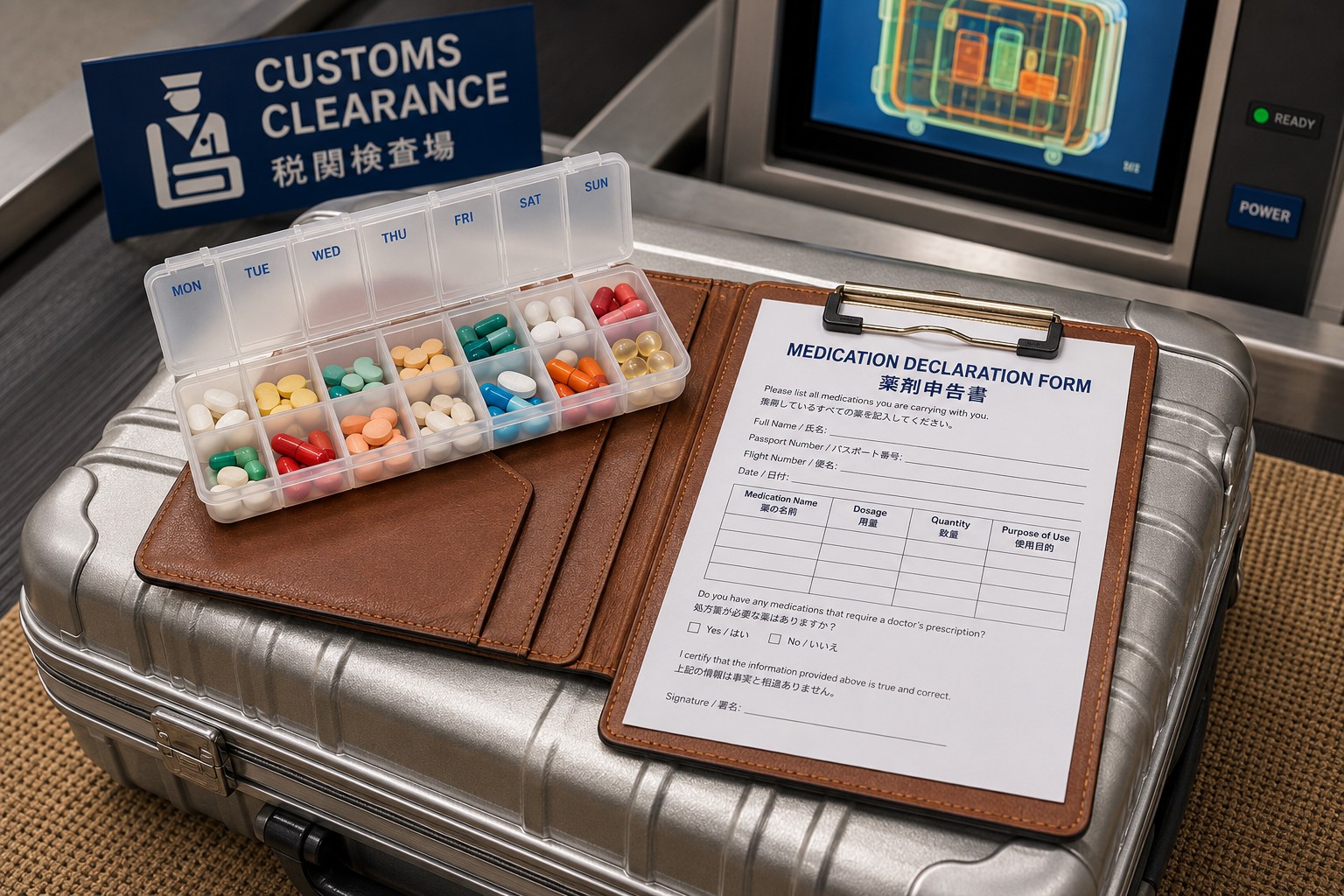
Imagine standing at the Kansai International Airport customs desk while an officer asks for documentation you simply don’t have in Japanese. It’s a high-pressure moment that no traveler wants to experience, yet it happens frequently when visitors are unsure about the specific rules for importing medication. One of the most effective ways to prevent this scenario is by translating prescriptions for Japan customs before you ever board your flight.

You likely feel a sense of unease regarding the “Restricted Items” section of your declaration form, especially when it comes to calculating what constitutes a “one-month supply” or choosing between digital and paper filing options. This guide provides the clarity you need to accurately declare your medications, ensuring a smooth, legal entry without the risk of confiscation. We’ll break down the specific limits set by the Ministry of Health, Labour and Welfare (MHLW), explain the critical distinction between a one-month prescription supply and a two-month over-the-counter limit, and show you how to validate your medical documentation for a stress-free arrival.

Key Takeaways

  • Identify whether to use the digital Visit Japan Web portal or a paper form to fulfill your mandatory 2026 customs declaration requirements.
  • Navigate the specific import thresholds by translating prescriptions for Japan customs when carrying more than a one-month supply of prescription medicine.
  • Understand how to link your customs declaration to a Yunyu Kakunin-sho certificate to avoid legal delays or medication confiscation at the border.
  • Prepare for the “Red Channel” by organizing your passport, customs QR code, and all necessary documentation for a smooth inspection process.
  • Learn how MedicTranslate provides the certified documentation and coordination support needed to meet strict Ministry of Health standards.

Understanding the Japan Customs Declaration for Medical Travelers

Every traveler arriving at Japanese ports of entry in 2026, whether landing at Kansai International or Narita, must complete a Customs Declaration Form. This document serves as a formal legal statement regarding the items you’re bringing into the country. For medical travelers, this step is the most critical part of the arrival process. You must declare all prescription medications, even those you consider routine or non-threatening. Japan’s regulatory environment is governed by the Pharmaceutical Affairs Law, which sets strict standards for what can enter the domestic market.

The Ministry of Health, Labour and Welfare (MHLW) maintains specific thresholds that travelers must follow. You’re permitted to bring up to a one-month supply of prescription medicine or a two-month supply of over-the-counter (OTC) medicine without prior specialized certification. However, these limits are strictly enforced. Failing to disclose your items or providing inaccurate information can lead to immediate seizure of your medication, heavy fines, or even legal detention at the border. The declaration form is a legally binding document for drug import, and your signature or digital submission confirms that you are in full compliance with these regulations.

Digital vs. Paper: Choosing Your Declaration Method

You have two primary ways to submit your declaration. The digital Visit Japan Web portal allows you to complete your forms online before you land. Once finished, the system generates a QR code that you scan at electronic customs kiosks. Many travelers prefer this method because it allows for calm, precise data entry at home rather than on a cramped airplane. Alternatively, you can use the traditional paper “Yellow Form” found on your flight or near baggage carousels. While the paper form is still valid, the digital version often provides a clearer record of your intent to comply with Japanese law, reducing the chance of manual transcription errors during a high-stress arrival.

Why Precision Matters on Your Declaration

Accuracy is your best defense against administrative delays. Customs officers frequently cross-reference the details on your form against the physical labels on your medication bottles. If there’s a discrepancy between the chemical names on your form and your actual supply, it will likely trigger a secondary inspection. This is where translating prescriptions for Japan customs becomes an essential part of your preparation. Having a clear, professional translation ensures that the Japanese name of your medication matches the documentation the officer is reviewing.

When you provide precise data, you demonstrate to the authorities that you’ve done your due diligence. This transparency helps you navigate the “Restricted Items” section without raising red flags. If you’re feeling overwhelmed by these requirements or the language barrier, please contact MedicTranslate for coordination help with your medical documentation and customs preparation. We are here to ensure your documents meet the necessary standards for a successful entry.

Step-by-Step Guidance for the Medication Section

When you log into the Visit Japan Web portal or look at the physical yellow form, you’ll encounter a series of checkboxes designed to screen for controlled goods. The most critical area for medical travelers is the section titled “Prohibited or Restricted Items.” On the digital interface, this is often presented as a series of Yes/No toggles. You must identify if your supply exceeds the standard Japanese import thresholds or contains substances that require special oversight. Selecting “Yes” for restricted items is not an admission of guilt; it’s a tool for full transparency that ensures you can discuss your needs with an officer rather than risking a discovery during a random bag check.

Before you reach the terminal, you should have your medical documentation organized and accessible. If you’re carrying more than the allowed personal limit, you must be ready to present your Yunyu Kakunin-sho, which is the official import certificate issued by the Ministry of Health, Labour and Welfare (MHLW). Having a professional service assist with translating prescriptions for Japan customs ensures that the details on your certificates perfectly match the labels on your medication, which is exactly what customs officers look for during a secondary inspection.

Answering the Restricted Items Question

A common mistake among visitors is assuming that “Restricted” only applies to illicit street drugs. In reality, many common medications used for ADHD, chronic pain, or even severe allergies fall into the “Narcotics, Psychotropics, or Stimulants” category under Japanese law. For example, some over-the-counter sinus medications containing pseudoephedrine are strictly prohibited if they exceed a 10% concentration. Always match your form answers to the information in your doctor’s referral letter. If your letter states you’re carrying a specific controlled substance, you must check “Yes” on the declaration form to remain in legal compliance.

Quantity and Supply Calculations for 2026

The MHLW defines a one-month supply based strictly on your prescribed dosage. If your doctor prescribes two tablets a day, a 60-count bottle is considered a one-month supply. It’s vital not to conflate this with over-the-counter (OTC) rules, as OTC medicines like ibuprofen or vitamins are allowed up to a two-month supply without a certificate. For medical devices, such as CPAP machines or a single set of syringes for insulin, you may generally bring one set for personal use. Always declare these items as “Personal Use Only” to clarify that you don’t intend to sell or distribute them within Japan. If you’re unsure how to calculate your specific dosage limits, please contact MedicTranslate for coordination help with your customs paperwork.

Linking Your Declaration to the Yunyu Kakunin-sho

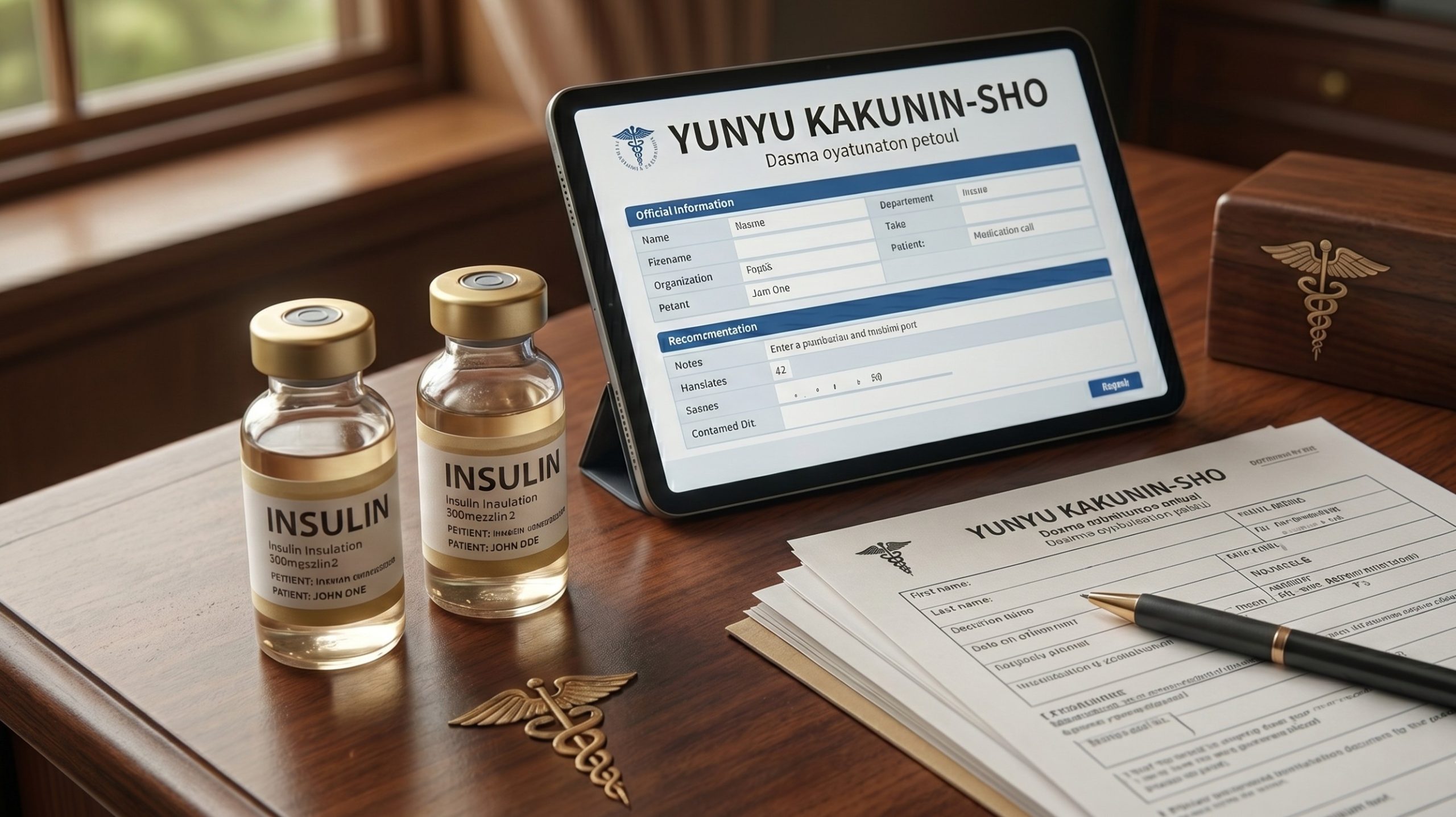
Checking “Yes” on your arrival documentation is a commitment to transparency that protects your legal standing in Japan. However, this declaration is only the first half of the process. For many travelers, the next requirement is presenting a Yunyu Kakunin-sho. This official import certificate serves as the formal bridge between your customs declaration and your physical medication. When an officer sees a “Yes” on your form, they’re trained to immediately look for this document to verify that the Ministry of Health, Labour and Welfare (MHLW) has already vetted your supply.

Without this pre-approved certificate, your honest declaration could ironically lead to the very outcome you’re trying to avoid. Customs officers don’t have the authority to make medical exceptions on the spot. If you declare a restricted supply but lack the Yunyu Kakunin-sho, they’re often required by law to confiscate the items. This is why linking your declaration to the correct paperwork is the most vital step in your travel preparation. The certificate acts as your legal shield, proving that your medications are for personal use and have been authorized for import under Japanese law.

When is a Yunyu Kakunin-sho Mandatory?

The necessity of this certificate depends on the type and quantity of the items you’re bringing. Under MHLW regulations, you must obtain a Yunyu Kakunin-sho if you’re carrying more than a one-month supply of prescription medication or more than a two-month supply of over-the-counter (OTC) medicine. These two limits are distinct and must never be conflated. Additionally, the certificate is mandatory for all injectable medications, such as insulin, and specific medical equipment like insulin pumps or CPAP machines. For 2026, the application process for a Yunyu Kakunin-sho typically takes several weeks to complete, as it requires the submission of your flight itinerary and detailed medical documentation well in advance of your departure.

The Role of Certified Medical Translation

Navigating the application process and the subsequent customs inspection is significantly easier when your documentation is clear. This is where Medical Document Translation becomes a critical asset. Customs forms are much simpler to complete when you’ve already had your primary documents processed into Japanese. By translating prescriptions for Japan customs, you ensure that the chemical names and dosages on your Yunyu Kakunin-sho perfectly align with Japanese pharmaceutical records. This precision is what allows a customs officer to verify your items in seconds rather than minutes.

MedicTranslate provides certified translations that customs officers can instantly verify, removing the ambiguity that often leads to secondary questioning. When your Japanese documentation matches your physical medication labels and your customs declaration, you create a seamless path through the terminal. If you need assistance organizing these documents or navigating the MHLW requirements, please contact MedicTranslate for coordination help with your medical paperwork.

Airport Logistics: Navigating the Red Channel

Once you’ve collected your luggage at the carousel, the final step of your arrival involves passing through the customs inspection area. If you’ve followed the guidance in previous sections and marked “Yes” on your declaration for medication, you must proceed to the Red Channel, which is the lane for “Goods to Declare.” While many travelers feel a natural spike in anxiety when choosing this path, it’s actually the safest way to ensure you’re in full compliance with Japanese law. Heading to the Green Channel with restricted items, even by mistake, can be interpreted as an attempt to smuggle controlled substances.

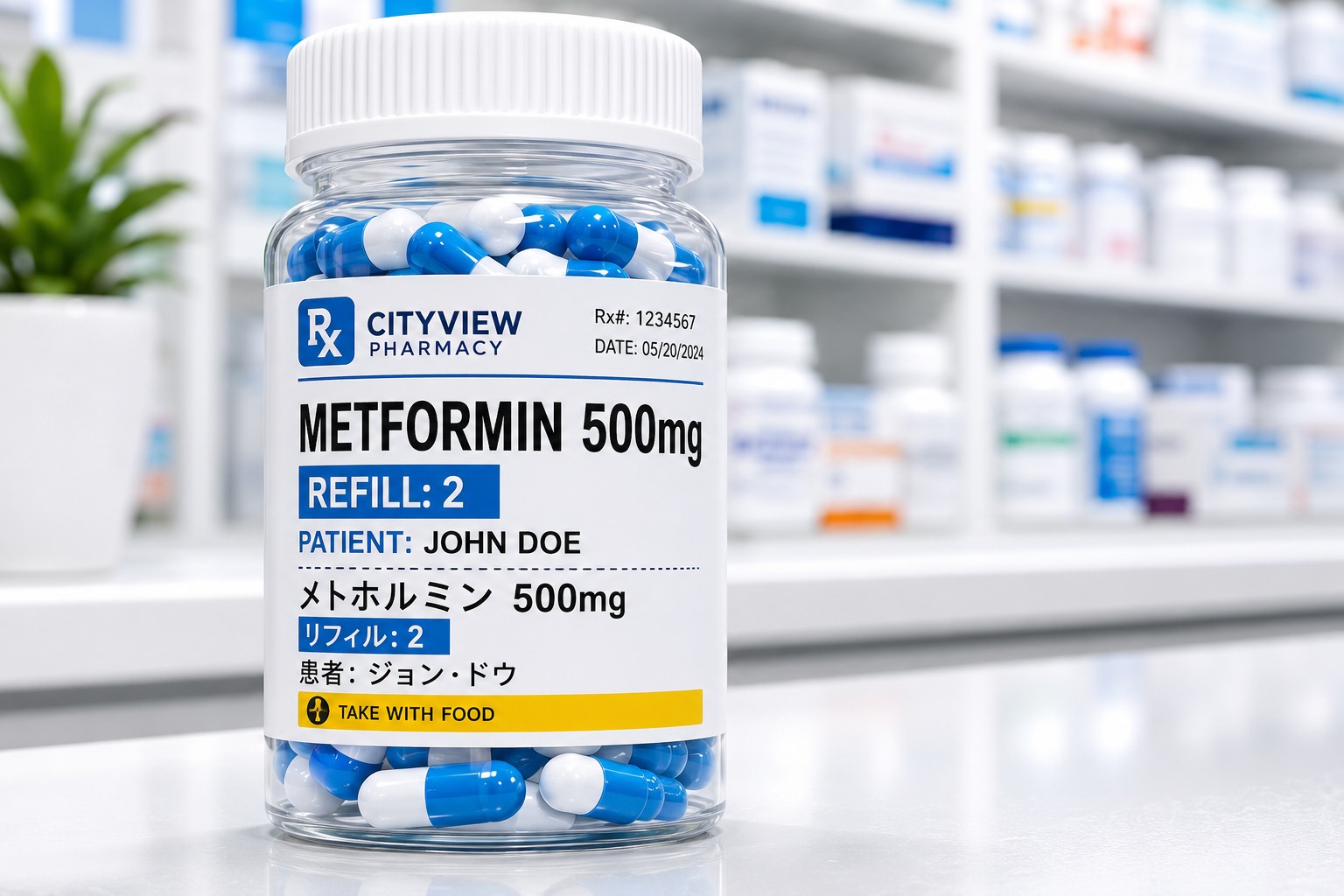
At the customs counter, have your passport, your Visit Japan Web QR code, and your physical medical documents ready for inspection. The officer will likely ask to see your medications. It’s essential to keep all medicine in its original packaging with the pharmacy label clearly visible. This allows the officer to quickly verify the drug name, dosage, and patient name against your paperwork. The process of translating prescriptions for Japan customs is what makes this physical inspection move quickly. When the officer can read a clear Japanese translation of your documents, they can reconcile your items with their internal database without needing to call for a supervisor or a specialist.

Communicating with Japanese Customs Officers

Customs officers are generally professional and efficient, but they’ll ask specific questions to verify your intent. You might hear: “What is this medication for?” or “Do you have a doctor’s letter?” If you don’t speak Japanese, this interaction can feel overwhelming. Using a translated medical report or a certified prescription translation helps bridge the language gap effectively. It provides the officer with the clinical precision they need to authorize your entry. Stay calm and professional; the officer isn’t looking for a reason to detain you, they’re simply ensuring that the items entering the country are safe and legal under Ministry of Health, Labour and Welfare (MHLW) standards.

What Happens if an Item is Questioned?

In some cases, an officer might identify a medication that is prohibited or requires a certificate you don’t possess. A common pitfall is bringing stimulants used for ADHD, like Adderall, which are strictly prohibited in Japan regardless of your prescription status. If an item is found to be restricted and you lack the proper MHLW approval, you may be offered the option of “Voluntary Abandonment,” where you legally surrender the medication to be destroyed. For more complex cases or significant language barriers, MedicTranslate’s Interpreter Coordination can assist by providing professional support to clarify your situation with authorities. If you’re concerned about the specifics of your medication before you fly, contact MedicTranslate for help with your customs documentation and coordination.

Airport Customs Form Guidance Japan: A 2026 Medical Declaration Guide

How MedicTranslate Facilitates Your Japan Entry

MedicTranslate understands that the final hurdle of your international journey shouldn’t be a source of legal anxiety. Our role is to serve as a meticulous facilitator, ensuring that every piece of medical documentation you carry is accurate, compliant, and ready for official review. By providing professional translating prescriptions for Japan customs, we help you align your medical needs with the rigorous standards of the Ministry of Health, Labour and Welfare (MHLW). Our goal is to make your entry into Japan as seamless as possible through proactive document coordination and precise linguistic support.

We strictly adhere to the regulatory distinctions set by the Japanese government. It’s vital to remember that you may bring up to a one-month supply of prescription medicine, while over-the-counter (OTC) medicine is allowed up to a two-month supply without a Yunyu Kakunin-sho. These two limits are never conflated in our guidance. Our coordination services ensure that your specific quantities are clearly documented, helping you avoid the common pitfalls that lead to secondary inspections or delays at the customs counter.

Our Airport Customs Form Guidance Service

Navigating the “Restricted Items” section of the Visit Japan Web portal requires more than just a basic understanding of your medications. We provide a step-by-step walkthrough of the digital declaration process tailored to your specific health profile. Our team reviews your medication list against the most current 2026 Japanese prohibited substances lists. This is vital because certain common ingredients in Western medications are strictly banned in Japan. By identifying these issues before you fly, we significantly reduce the risk of medication seizure or legal complications at the airport. We don’t just tell you what to declare; we help you organize the supporting evidence that justifies your “Yes” response on the customs form.

Securing Your Health Journey in Japan

Your need for reliable medical support doesn’t end once you leave the airport terminal. Since foreign prescriptions cannot be refilled at Japanese pharmacies, you’ll eventually need to consult a local physician to obtain a domestic equivalent. We assist with healthcare navigation by helping you prepare the translated medical history and records necessary for a Japanese doctor to understand your ongoing treatment plan. This comprehensive approach ensures your medications remain legal and accessible throughout your stay, whether you’re a short-term visitor or a long-term resident in the Kansai region.

The peace of mind that comes with professional, certified medical support is invaluable when navigating a foreign legal system. Translating prescriptions for Japan customs is just the beginning of a secure medical transition. We invite you to Contact MedicTranslate today for a full document review. Our coordination specialists are ready to help you prepare your Yunyu Kakunin-sho applications and ensure your medical documentation stands up to official scrutiny. Let us help you bridge the gap between your home healthcare system and Japan’s unique regulatory environment.

Preparing for a Seamless Arrival in Japan

Navigating the complex regulations of the Ministry of Health, Labour and Welfare (MHLW) doesn’t have to be a source of stress during your journey. By accurately calculating your personal supply limits, such as the one-month prescription cap versus the two-month over-the-counter allowance, you establish a clear record of legal compliance. Choosing the Red Channel and presenting organized documentation ensures that your interaction with customs officers is efficient and transparent. The final key to success is translating prescriptions for Japan customs to ensure your medical needs are understood by local authorities without delay.

MedicTranslate is here to act as your meticulous facilitator. We provide certified medical translation with a standard 72-hour turnaround to meet your travel deadlines. Our team offers expert healthcare navigation to help you organize your Yunyu Kakunin-sho and customs paperwork before you even leave home. Get Expert Airport Customs Form Guidance for Your Japan Trip today to ensure your medications arrive safely with you. We look forward to helping you start your time in Japan with complete confidence and legal security.

Frequently Asked Questions

Do I need to declare my daily birth control or vitamins on the Japan customs form?

Yes, you should declare all medications and supplements to ensure full transparency during your entry. While vitamins are generally categorized as over-the-counter items with a two-month allowance, birth control is a prescription medication that follows the one-month supply limit. Marking “Yes” on your form allows you to discuss these items openly with an officer, which prevents misunderstandings if your luggage is selected for a random inspection.

Can I bring a 3-month supply of antidepressants if I have a medical certificate?

No, a medical certificate from your doctor is not sufficient for a three-month supply of prescription medication. According to Ministry of Health, Labour and Welfare (MHLW) regulations, any prescription supply exceeding 30 days requires an official Yunyu Kakunin-sho import certificate. You must obtain this document before you arrive in Japan. Without it, customs officers are typically required to confiscate the portion of your medication that exceeds the one-month limit.

What happens if I forget to declare my medication and customs finds it?

Failing to declare medications can result in immediate confiscation, financial penalties, or legal detention. If you proceed through the Green Channel and an officer discovers undeclared prescription drugs, it may be treated as a violation of the Pharmaceutical Affairs Law. Even for routine medications, honesty is the safest policy. It is always better to choose the Red Channel and have your documentation verified by a professional customs officer.

Is a medical certificate from my home country doctor enough for Japan customs?

A medical certificate is a vital supporting document, but it does not replace the mandatory Yunyu Kakunin-sho for large supplies. For amounts under the one-month threshold, a doctor’s letter is often sufficient for verification. However, translating prescriptions for Japan customs into Japanese significantly streamlines the process. It allows officers to quickly confirm that your medication names and dosages align with local pharmaceutical standards and safety regulations.

How do I use the Visit Japan Web QR code at the customs kiosk?

You use the QR code by scanning it at an electronic customs kiosk located in the arrivals hall. After scanning your passport and the code, the machine will process your data and print a declaration record. If you’ve declared restricted items like medication, the system will usually direct you to a staffed counter. There, an officer will perform a physical check of your medications and your supporting medical certificates.

Can I bring ADHD medication like Adderall or Ritalin to Japan in 2026?

Adderall is strictly prohibited in Japan because it contains amphetamines, which are illegal under all circumstances. Ritalin is classified as a psychotropic and requires specific, advance permission from the Narcotics Control Department if you carry more than a limited amount. Attempting to bring prohibited stimulants like Adderall into the country can lead to arrest and criminal prosecution. Always check the prohibited list before finalizing your travel plans.

What is the “Red Channel” and should I always use it for prescriptions?

The Red Channel is the designated lane for travelers who have goods to declare to customs. You should use this channel if you’re carrying any medication that requires a Yunyu Kakunin-sho or if you’ve marked “Yes” for restricted items on your declaration form. Using the Red Channel is a proactive way to ensure your entry is legal. It provides a formal setting to present your documentation and have your supply verified.

How long does it take to get a Yunyu Kakunin-sho for my trip?

You should expect the application process to take approximately two to four weeks from the time you submit your documents to the MHLW. This timeline depends on the complexity of your medication list and the current volume of applications. When translating prescriptions for Japan customs, starting the process early is essential. This ensures your paperwork is complete and certified before your departure, preventing any last-minute complications at the border.

If you’re feeling overwhelmed by these regulations or need assistance with your documentation, please contact MedicTranslate for coordination help. We are here to ensure your medical paperwork is organized and compliant for your journey to Japan.

Ali Motahari

Article by

Ali Motahari

Ali is the founder and Representative Director of MedicTranslate Co., Ltd., a Kobe-based medical translation and healthcare coordination company that helps English-speaking foreign residents and visitors navigate the Japanese healthcare system, with a focus on the Kansai region. He has more than 20 years of experience in healthcare and healthcare IT, and is a doctoral researcher studying how healthcare organisations adopt clinical information systems. He writes about navigating medical care, translation, and the administrative and customs requirements that foreign patients face in Japan. MedicTranslate coordinates and translates; it does not provide medical treatment, diagnosis, or pharmaceutical supply.

Disclaimer

This article is for general information only and is not medical or legal advice. Rules in Japan can change, so please confirm current requirements with the Japanese Ministry of Health, Labour and Welfare (MHLW) or other official sources before acting. MedicTranslate provides medical translation and healthcare coordination services and does not provide medical treatment, diagnosis, or pharmaceutical supply. For help coordinating care or translating documents in Japan, contact MedicTranslate.

Post Tags :

Share :