
Free Medical Interpreter in Japan: What's Available and When It Isn't Enough
Yes, a free medical interpreter in Japan exists, but coverage is patchy: a nationwide visitor hotline, phone lines in Tokyo and Fukuoka, and a few hospital programmes in Kyoto, Osaka and Kobe, each with set hours, languages and limits. This guide lists the free services we verified, what they will and won't do, and when it is worth paying for an interpreter.
Quick answer
Free medical interpreting in Japan is run by the national tourism organisation, cities, prefectures, public hospitals and non-profit groups. Most of it is by phone: the 24-hour Japan Visitor Hotline nationwide, Tokyo's Himawari information line and Fukuoka City's 24-hour call centre. Free interpreters who come to the hospital in person are rare; Kyoto City's scheme, for example, covers three hospitals, outpatients only and mornings only. If you need someone in the room, help outside these hours, or a less common language, book a professional interpreter instead.
Appointment coming up and no interpreter confirmed? Tell us the date, hospital and language, and we will reply with availability within 1–3 business days.
Book an interpreterOn this page
- Who provides a free medical interpreter in Japan?
- Free medical interpreting by area: nationwide, Tokyo and Fukuoka
- Free medical interpreter in Japan: Kyoto, Osaka and Kobe compared
- How to request a free medical interpreter in Japan
- Free phone help that is not a full interpreter
- When a free medical interpreter in Japan is not enough
- Frequently asked questions
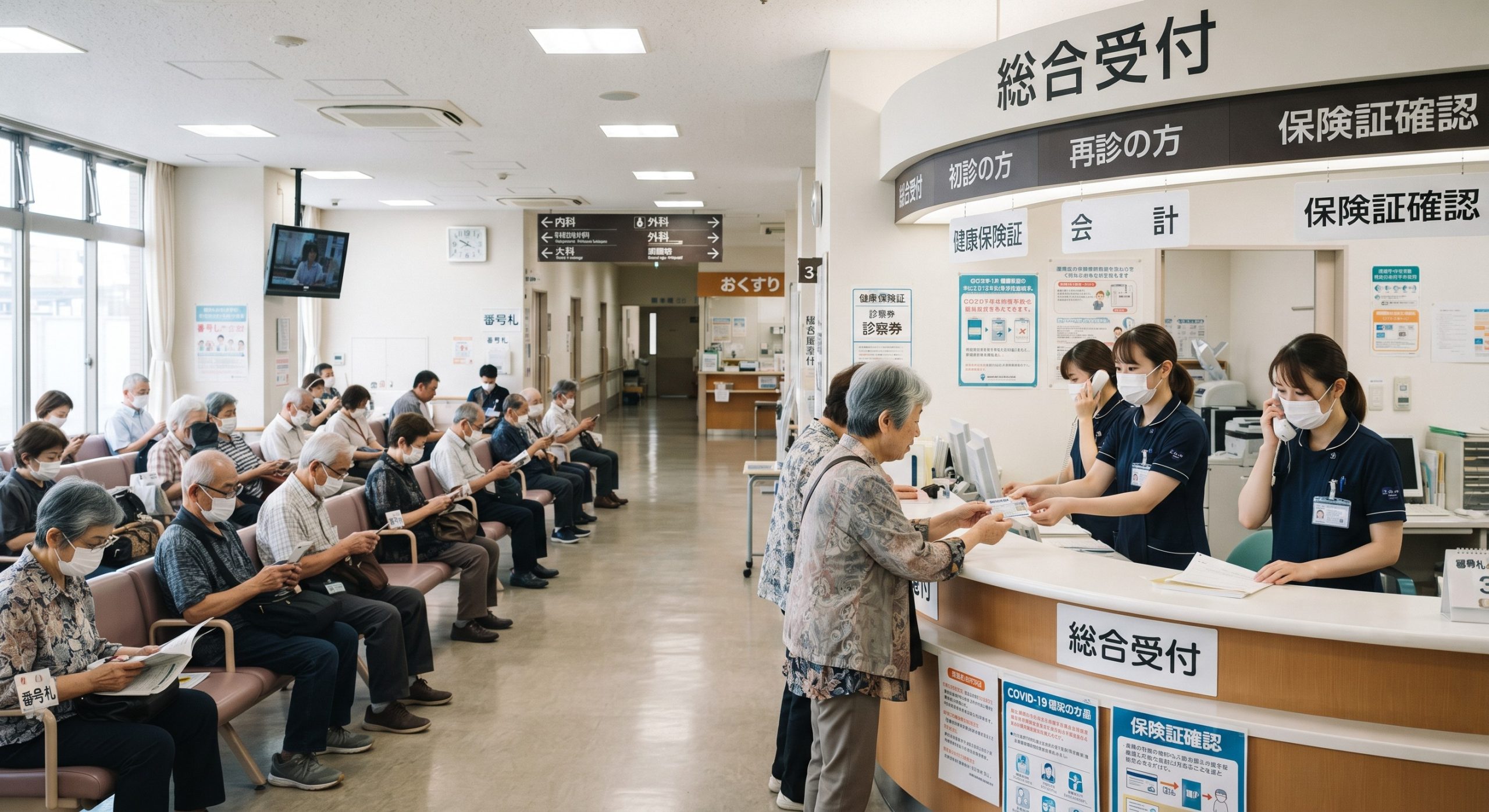
Who provides a free medical interpreter in Japan?
Japan has no single national service that sends a free interpreter to any patient at any clinic. Instead, a patchwork of local programmes fills part of the gap. In practice, a free medical interpreter in Japan usually comes from one of four sources:
City and prefecture programmes
Run with a local international association, often using trained volunteers. Example: Kyoto City with KCIF.
Phone interpreting lines
A three-way call between you, the interpreter and hospital staff. Examples: Fukuoka City call centre; Tokyo's emergency line, which the hospital calls.
Non-profit dispatch
A small flat fee per visit at participating hospitals. Example: FACIL in Kobe.
Phone helplines
Help finding a clinic or explaining the system, not a full interpreter at your appointment.
As a result, the answer depends heavily on which city you are in and which hospital you are visiting. The Ministry of Health, Labour and Welfare (MHLW) also notes in its manual for hospitals that medical interpreters, especially for rare languages, remain in short supply, which is why coverage is uneven.
Free medical interpreting by area: nationwide, Tokyo and Fukuoka
Outside Kansai, the main free services are phone lines. None of them sends an interpreter to sit with you at the doctor's. The table shows what each offered when we checked on 6 October 2026.
| Service | Area | How it works | Hours | Languages |
|---|---|---|---|---|
| Japan Visitor Hotline (JNTO) 050-3816-2787 | Nationwide | Phone help with illness, emergencies and finding a hospital with foreign-language support | 24 hours, every day | English, Chinese, Korean |
| Himawari medical information (Tokyo Metropolitan Government) 03-5285-8181 | Tokyo | Phone information on hospitals and Japan's health system | 9:00 to 20:00, every day | English, Chinese, Korean, Thai, Spanish |
| Emergency interpreting for medical institutions (Tokyo Metropolitan Government) | Tokyo | Phone interpreting for emergency patients. Only registered hospitals and clinics can call it, so ask the hospital to use it | English and Chinese 24 hours; other languages weekdays 17:00 to 20:00, weekends and holidays 9:00 to 20:00 | English, Chinese, Korean, Thai, Spanish, French, Vietnamese, Nepali, Tagalog |
| Fukuoka City Medical Interpreting Call Center 092-733-5429 | Fukuoka City | Phone interpreting between you and a hospital or pharmacy | 24 hours, every day | 20 languages, including English, Chinese, Korean, Vietnamese, Nepali, German, French and Russian |
The Fukuoka line is free to use, but you pay the normal call charges. Both patients and medical facilities can call it, which makes it one of the most flexible free services in Japan.
Free medical interpreter in Japan: Kyoto, Osaka and Kobe compared
Kansai is the main exception to the phone-only rule. We checked the official pages for the three cities where MedicTranslate works most; the table summarises each programme as reviewed in October 2026.
| Programme | Cost to patient | Where | Main limits |
|---|---|---|---|
| Kyoto City / KCIF medical interpreter dispatch | Free | Kyoto City Hospital, Ijinkai Takeda General Hospital, Kyoto Katsura Hospital | In person, outpatients only; 9:00 to 12:00 with reception closing at 11:00; some hospitals need at least 5 days' notice; request through the hospital |
| Osaka Prefecture 24-hour remote medical interpreting | Free (the hospital pays call charges) | Registered hospitals, clinics and pharmacies in Osaka Prefecture | Patients cannot call it directly; the facility must be registered; 9 languages, with Nepali added in June 2026 |
| Osaka Prefectural Hospital Organization volunteer interpreters | Free | 5 prefectural hospitals, including Osaka General Medical Center and Osaka International Cancer Institute | Weekdays only, usually about 3 to 4 hours per visit; tell the hospital in advance; some visits use phone interpreting |
| FACIL (Kobe non-profit) | ¥1,650 remote or ¥2,750 in person, flat per patient per day | About ten participating hospitals, including Kobe City Medical Center General Hospital and Kobe University Hospital | Fee paid at the hospital; other facilities charged at different rates |
| KICC (Kobe International Community Center) | Free | Ward offices and public facilities in Kobe | Does not cover hospital consultations; apply at least 7 business days ahead |
Elsewhere, check your prefecture first. For instance, Hiroshima International Center sends volunteer interpreters to 11 participating facilities, but only at the hospital's request, and its volunteers do not interpret informed-consent discussions.
How to request a free medical interpreter in Japan
Most in-person programmes are hospital-led, so the request usually starts with the hospital rather than with you. Therefore, follow these steps as early as possible:
- Ask the hospital directly. Call the international patient desk or reception and ask whether it participates in a city, prefecture or non-profit interpreter programme (通訳サービス, tsūyaku sābisu).
- Give the language, date and department. Free interpreters are booked per language and time slot, so vague requests are often declined.
- Allow notice. In Kyoto, some hospitals want at least 5 days; in Kobe, KICC needs 7 business days for ward-office visits.
- Confirm the format. Ask whether the interpreter will attend in person or by phone or video, and for how long.
- Have a back-up. Volunteer availability is never guaranteed, so save your local phone line (such as Himawari or the Fukuoka call centre) and know what you will do if nobody is available on the day.
In addition, if you are not yet sure which hospital to use, the Japan National Tourism Organization (JNTO) lets you search medical institutions by prefecture and language spoken.

Free phone help that is not a full interpreter
Several free services help you find care or understand the system, but they are not the same as an interpreter standing beside you in the consultation room. For example:
- AMDA International Medical Information Center: free telephone consultation on 0120-339-266 (or 03-6233-9266), weekdays 10:00 to 16:00, in English, Chinese, Korean, Spanish, Portuguese, Thai, Filipino and Vietnamese, with languages rotating by day. It also offers remote interpreting on 050-3405-0397 from 10:00 to 15:00, and connection fees apply.
- Prefectural multilingual centres: MHLW lists local call centres, such as the Hyogo Multicultural Counseling Center, which covers 19 or more languages.
- Hospital remote systems: MHLW also funds a rare-language phone interpreting service, but only registered medical institutions can use it.
These lines are useful for orientation. However, they rarely solve the problem of a specific appointment at a specific time.
When a free medical interpreter in Japan is not enough
Free services are built for emergencies, finding a hospital and routine outpatient visits at participating hospitals. In contrast, you will usually need to arrange your own interpreter when:
- the only free option is a phone call, which is hard in a busy consultation room, especially for tests, consent forms or bad news;
- your clinic or hospital is not part of any programme, which is common for private clinics;
- the appointment falls outside a service's hours, for example in the afternoon for Kyoto's scheme;
- you are being admitted, discharged or having surgery, where several conversations happen over days;
- the doctor needs to explain risks and get your consent, which some volunteer programmes do not cover;
- you need a language the service does not offer: most lines cover English, Chinese and Korean, and Persian or Arabic speakers often have no free option;
- you need documents translated, such as referral letters, test results or prescriptions, which free lines do not provide.
Put simply, pay for an interpreter when the appointment matters more than the fee: a specialist visit, surgery consent, a hospital admission, pregnancy care or a mental health consultation.
Hospitals may also charge for their own interpreting. MHLW's manual explains that medical interpreting is not part of insured treatment, so a hospital can charge for it separately after explaining the service and getting your consent. Ask about any fee before the appointment.
Finally, remember that a free medical interpreter in Japan is often a trained volunteer. That is valuable, but for complex conversations you may prefer a professional who can also help you prepare beforehand and translate your medical documents. See our published interpreting rates to compare.
Need an interpreter the free services can't cover?
MedicTranslate arranges professional medical interpreters for clinic and hospital visits, admissions and consent discussions. Book in person across Kansai and beyond or by video and phone anywhere in Japan, including before you arrive. We can also help arrange the clinic appointment and translate the documents you bring home.
- English, German, Arabic, Chinese, Spanish, French, Portuguese, Russian and Persian ⇄ Japanese
- In person across Kansai and beyond, remote Japan-wide
- Reply within 1–3 business days
- Price confirmed before you book
Kobe-based · in person in Hyogo, Osaka and Kyoto · video and phone interpreting nationwide · interpreters do not give medical advice.
Frequently asked questions
Is there a free medical interpreter in Japan for any hospital?
No. Free interpreting is available only through specific national, city, prefecture, hospital or non-profit services, and each covers a limited set of hospitals, languages and hours. Ask your hospital whether it takes part in one.
Is there a free medical interpreter in Tokyo?
Yes, but through the hospital. The Tokyo Metropolitan Government runs an emergency phone interpreting service that only registered hospitals and clinics can call, with English and Chinese available 24 hours. To find a hospital with foreign-language staff, call Himawari on 03-5285-8181, 9:00 to 20:00 every day.
Can a free interpreter come to the hospital with me?
Rarely. Kyoto City sends free interpreters in person to three hospitals for outpatients, and Osaka's prefectural hospitals use volunteer interpreters. Elsewhere, free help is usually by phone, and in-person help is usually paid.
Can I call the Osaka 24-hour medical interpreting service myself?
No. The Osaka Prefecture service is for registered hospitals, clinics and pharmacies. The facility connects you, the service is free for you, and the facility pays the call charges.
Does KICC in Kobe send interpreters to hospitals?
No. KICC sends free volunteer interpreters to ward offices and public facilities in Kobe, but hospital consultations are excluded. For Kobe hospitals, ask whether the hospital works with FACIL or book a professional interpreter.
How far ahead should I request a free interpreter?
As early as possible. Some Kyoto hospitals ask for at least 5 days' notice, and KICC in Kobe asks for at least 7 business days. Volunteer availability is never guaranteed.
Can a hospital in Japan charge me for an interpreter?
Yes. According to the MHLW manual for hospitals, interpreting is not part of insured treatment, so a hospital may charge for it separately after explaining the service and getting your consent.
Do free interpreters cover surgery or informed consent?
Not always. Some volunteer programmes, such as the one run by Hiroshima International Center, state that they do not interpret informed-consent discussions. For surgery or admission, a professional medical interpreter is usually the safer choice.
This article provides general information reviewed on 6 October 2026. It is not medical or legal advice. Free and low-cost interpreter services are run by national bodies, municipalities, hospitals and non-profit groups, and their phone numbers, hospitals, languages, hours and fees change, so confirm the details with the service or hospital before you rely on them. In an emergency, call 119. MedicTranslate interpreters convey what is said; they do not give medical advice, make clinical decisions or guarantee appointments.
- JNTO: Guide for when you are ill in Japan, Japan Visitor Hotline and medical institution search
- Tokyo Metropolitan Government: Medical information services for foreigners, including emergency interpretation for medical institutions
- Tokyo Metropolitan Government: Emergency interpreting service for medical institutions (医療機関向け救急通訳サービス)
- Chuo City, Tokyo: Medical consultation in foreign languages (Himawari 03-5285-8181)
- Fukuoka City: Medical Interpreting Call Center (福岡市医療通訳コールセンター)
- Kyoto City / Kyoto International Foundation (KCIF): Medical interpreter dispatching service
- Osaka Prefecture: 24-hour multilingual remote medical interpreting service (大阪府24時間多言語遠隔医療通訳サービス)
- Osaka Prefectural Hospital Organization: Interpreter to foreigners
- Kobe International Community Center (KICC): Interpreter dispatch service
- FACIL (Kobe non-profit): Medical interpreting at participating hospitals (医療通訳)
- AMDA International Medical Information Center
- MHLW: Information on local call centers for foreign residents and visitors
- MHLW: Manual for medical institutions accepting foreign patients (外国人患者の受入れのための医療機関向けマニュアル)