
Is Ibuprofen Allowed in Japan? Advil, Motrin and the OTC Supply Limit
Is ibuprofen allowed in Japan? Yes. Ibuprofen イブプロフェン is approved in Japan and sold in both prescription and over-the-counter products. The real questions are whether your exact product counts as a prescription drug, how much you are carrying, and whether it contains other active ingredients.
Quick answer
Plain ibuprofen (Advil, Motrin, Nurofen) is not prohibited or controlled in Japan. Without Import Confirmation, MHLW generally allows up to one month's supply of a prescription drug or up to two months' supply of other medicines. Combination products containing codeine, pseudoephedrine or a sedating antihistamine need a separate check.
Not sure whether your pain reliever is plain ibuprofen or a combination product?
Check my medicationOn this page
Is ibuprofen allowed in Japan? Yes, it is approved and sold
PMDA lists prescription ibuprofen products such as Brufen ブルフェン tablets (100 mg and 200 mg) and granules, alongside generic ibuprofen tablets. Ibuprofen is also the active ingredient in many Japanese OTC pain relievers, some of which are classed as designated Class 2 OTC medicines.
"Available in Japan" does not mean every Japanese product matches Advil or Motrin. For example, many Japanese OTC pain relievers combine ibuprofen with caffeine or other ingredients, and the strength per dose can differ.
How much ibuprofen can you bring to Japan?
There is no blanket "two-month ibuprofen rule". Instead, MHLW's personal-import exemption depends on how your product is classified:
| Type of medicine | Generally allowed without Import Confirmation |
|---|---|
| Prescription drug (including poisonous and powerful drugs) | Up to one month's supply |
| Other medicines and quasi-drugs (OTC) | Up to two months' supply |
| Topical products (for example ibuprofen gel) | Up to 24 items per product |
So is ibuprofen allowed in Japan in any quantity? No: these limits apply only if the product is not separately restricted. Above them, you need Import Confirmation (formerly yakkan shoumei) before you travel.
If your ibuprofen was prescribed overseas (for example a higher-strength tablet), do not assume the two-month allowance for OTC medicines applies. Check the exact product and quantity before you pack.
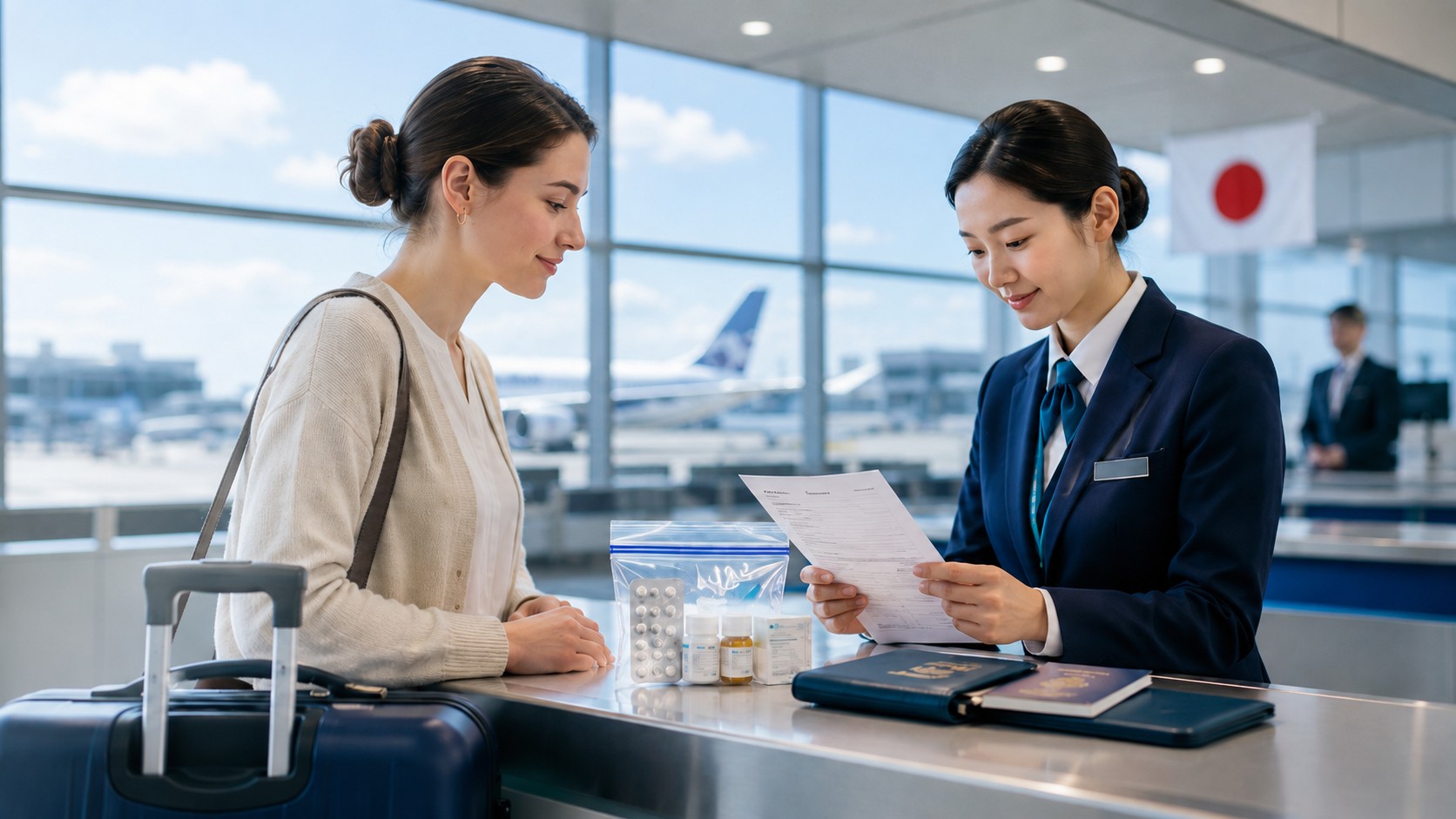
Is ibuprofen allowed in Japan in combination products?
Several familiar overseas products combine ibuprofen with a second active ingredient. As a result, that second ingredient, not the ibuprofen, usually decides the rules.
| Example overseas product | Extra ingredient | Why it matters in Japan |
|---|---|---|
| Advil PM, Motrin PM | Diphenhydramine (sedating antihistamine) | Diphenhydramine is a designated misuse-prevention ingredient from 1 May 2026, so check it separately. See our Benadryl guide. |
| Advil Cold & Sinus | Pseudoephedrine (decongestant) | A designated misuse-prevention ingredient from 1 May 2026. Products with more than 10% pseudoephedrine are stimulant raw materials. |
| Ibuprofen with codeine (for example Nurofen Plus) | Codeine | Codeine is regulated in Japan and is also on the misuse-prevention list. See controlled medicines in Japan. |
Do not treat a combination product as plain ibuprofen. Read the full active-ingredient list on the box before you travel.
Buying ibuprofen locally in Japan
Ask for イブプロフェン (ibuprofen) at a drugstore. Japanese OTC ibuprofen is sold under Japanese brand names, so Advil or Motrin may not be recognised. Our guide to finding a Japanese OTC equivalent explains how to match products by ingredient.
The Japanese OTC ibuprofen labels we checked allow up to 200 mg per dose and 600 mg per day, and say the product must not be used by children under 15.

Follow the Japanese product directions
PMDA-published OTC ibuprofen documents list important warnings, including not using the product if you have had asthma triggered by a painkiller or cold medicine, and asking a doctor or pharmacist first if you are pregnant or breastfeeding. They also warn against taking it with other painkillers, cold medicines or sedatives.
Do not carry over the dose from your home-country label. Strength, dosing limits and combination ingredients can differ. Ask a pharmacist or doctor if you are unsure.
Unsure about your exact pain reliever?
We check your product by active ingredient, strength, dosage form and quantity against the published MHLW rules, and help you prepare an Import Confirmation application if you need one.
- Price confirmed before work begins
- Reply within 2–3 business days (or sooner)
- Secure document process
MedicTranslate is not a healthcare provider or customs authority. We do not give medical advice or guarantee customs approval.
Frequently asked questions
Is ibuprofen legal in Japan?
Yes. Ibuprofen is not a narcotic, psychotropic or stimulant in Japan. PMDA lists prescription ibuprofen products such as Brufen, and ibuprofen is sold in Japanese OTC pain relievers.
Can I bring two months of ibuprofen to Japan?
Not automatically. Under MHLW personal-import rules, prescription drugs are generally limited to one month's supply and other ordinary medicines to two months' supply without Import Confirmation. Which limit applies depends on your exact product.
Can I buy Advil or Motrin in Japan?
They are not the usual Japanese retail brands. Ask for ibuprofen (イブプロフェン) and compare the active ingredients and strength on the Japanese box.
Is Japanese OTC ibuprofen the same strength as Advil?
Not necessarily. The Japanese OTC ibuprofen labels we checked allow up to 200 mg per dose and 600 mg per day, which may differ from your home label. Follow the Japanese label or ask a pharmacist.
Can children take Japanese OTC ibuprofen?
The Japanese OTC ibuprofen products we checked say they must not be used by children under 15. Ask a pharmacist or paediatric doctor about suitable options for children.
What about Advil PM or Advil Cold and Sinus?
Check them separately. Advil PM also contains diphenhydramine and Advil Cold and Sinus contains pseudoephedrine. Both ingredients are covered by Japan's designated misuse-prevention medicine rules in force from 1 May 2026.
This article provides general information reviewed on 30 September 2026. It is not medical, pharmaceutical or legal advice. Product ingredients, strengths, classifications, import limits and availability change. Check the exact label, ask a pharmacist or doctor before using or changing a pain reliever, and confirm import requirements with MHLW or the Regional Bureau of Health and Welfare before you travel. MedicTranslate provides translation and coordination services.