
Calling 119 in Japan: Ambulances, #7119 and What Foreign Visitors Should Know
Calling 119 in Japan connects you to the ambulance and fire service. For a serious or life-threatening illness or injury, call 119 immediately. If you are unsure whether an ambulance is necessary, #7119 may be available in your area.
Life-threatening emergency? Call 119 now. Do not delay emergency care while searching for an English-speaking clinic, an interpreter or cost information. For police, call 110.
Quick answer
Call 119 for a medical emergency. Tell the dispatcher it is an ambulance emergency, give your location, describe what happened and stay on the line. Public ambulance dispatch and transport are free; hospital treatment is billed separately.
On this page
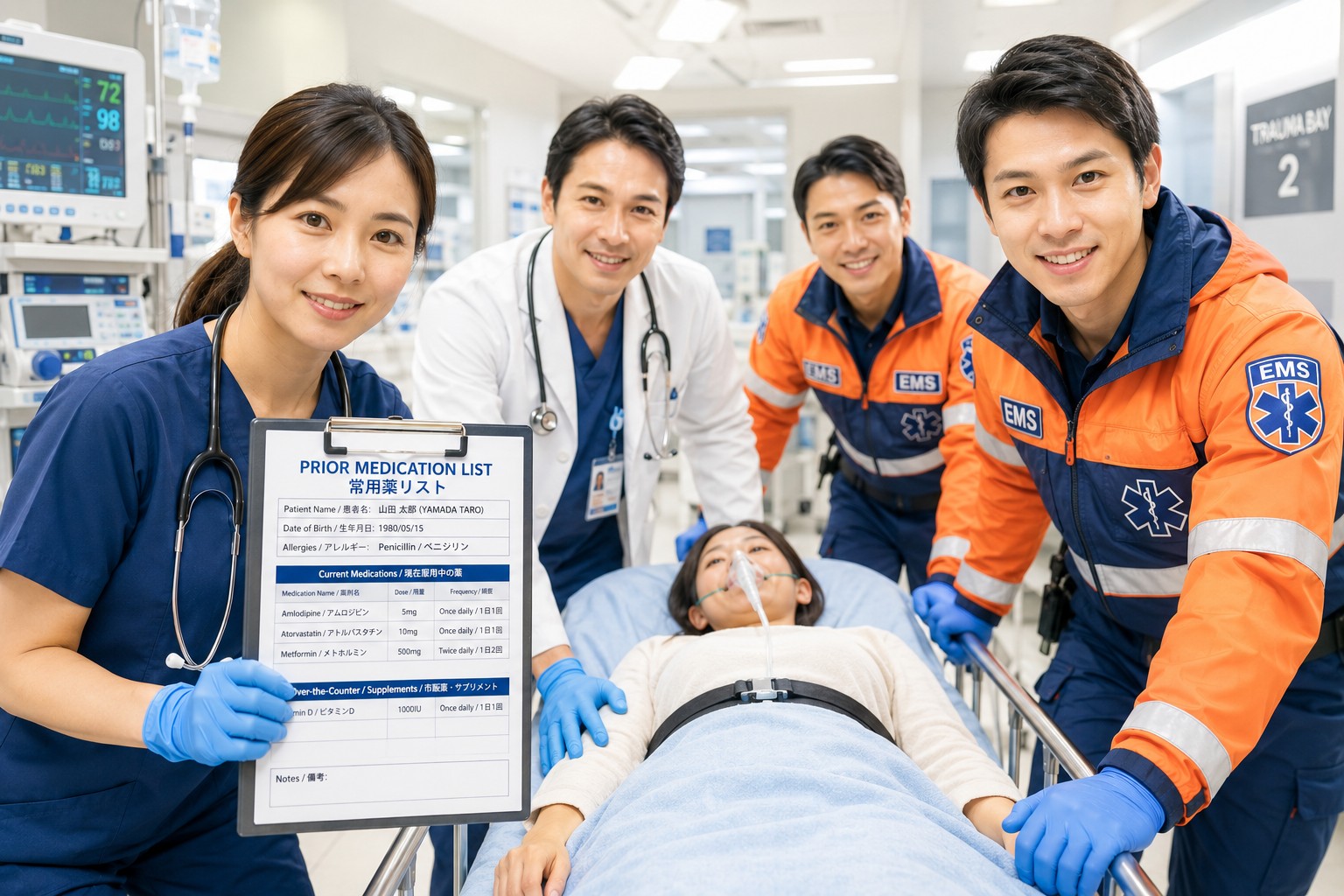
Calling 119 in Japan, step by step
- Dial 119 The number works for fire and ambulance emergencies from any phone, including mobiles.
- Say it is a medical emergency If you can, say "kyūkyū desu" (救急です), meaning you need an ambulance. For fire, the word is "kaji" (火事).
- Give the location Provide the address. However, if you do not know it, describe a nearby station, building, shop or intersection, or read the address from a nearby sign, vending machine or utility pole.
- Describe the patient and symptoms The dispatcher may ask about consciousness, breathing, age, injury or sudden illness.
- Give your name and phone number Then stay available in case the dispatcher needs to call back or confirm the location.
Calling 119 in Japan if you do not speak Japanese
Japan's Fire and Disaster Management Agency (FDMA) supports multilingual 119 calls through three-way telephone interpretation, available 24 hours a day in major languages. As of 1 January 2025, 673 of Japan's 720 fire departments had introduced it, so coverage is very wide but not universal. In addition, ambulance crews can use FDMA's multilingual voice-translation app, Kyūkyū VoiceTra, at the scene.
Say "No Japanese" or "English, please", stay on the line and answer slowly. Also, if a Japanese speaker is nearby, ask them to help explain your location and the patient's condition.
Non-emergency help in English: the Japan National Tourism Organization runs the Japan Visitor Hotline on 050-3816-2787 (+81-50-3816-2787 from an overseas phone), 24 hours a day in English, Chinese and Korean, for help with accidents, illness and disasters. However, it is not an emergency service and cannot dispatch an ambulance.

Is the ambulance free after calling 119 in Japan?
119 ambulance service
Public ambulance dispatch and transport by the fire service are not charged, for residents and visitors alike. The fees some areas have introduced are hospital charges, explained below.
Hospital treatment
However, you remain responsible for the hospital's examination and treatment charges according to your insurance status and the facility's billing rules. Visitors without Japanese public health insurance usually pay the full cost, so keep travel-insurance details with you.
When you are unsure: #7119 and #8000
#7119: adult emergency consultation
Doctors and nurses advise whether to call an ambulance, go to hospital now or wait. FDMA lists it in 41 areas; it is not yet nationwide and is mainly in Japanese.
#8000: children's consultation
For parents and carers unsure what to do about a child's symptoms, mainly evenings, nights and weekends. Available nationwide through each prefecture's service, in Japanese.
If symptoms are severe or clearly life-threatening, skip the advice line and call 119 directly.
Why you may still receive a "selective treatment" hospital fee
The ambulance itself is free, but some hospitals and local authorities apply a selective treatment fee (選定療養費) in defined cases where a patient arrives by ambulance and, after medical assessment, the visit does not meet the local emergency criteria.
In other words, this is not a nationwide ambulance fee. Instead, it is a hospital charge under local or facility rules. Two published examples:
Ibaraki Prefecture
23 large hospitals may charge ¥2,200 to ¥13,200, depending on the hospital, when the call is judged not to have been urgent.
Matsusaka City, Mie
Three key hospitals charge ¥7,700 (tax included) to ambulance patients who are not admitted and have no referral letter, with exemptions such as a doctor's judgement.
Do not let a possible hospital fee stop you calling 119 in a real emergency. The medical risk of delaying emergency treatment outweighs a potential selective-treatment charge.
What to prepare while the ambulance is coming
Need help with the hospital, your insurer or follow-up care?
After calling 119 in Japan and once the immediate emergency is under control, MedicTranslate can translate hospital documents for your travel insurer, arrange interpreters for follow-up appointments and help you find foreign-friendly care.
- Discharge summaries, receipts and medical certificates translated for insurance claims
- Interpreter coordination for follow-up appointments
- Help finding foreign-friendly clinics for ongoing care
MedicTranslate is not an emergency service. In a life-threatening situation, call 119. Translation quotes depend on document length and language pair. Subject to the applicable terms.
Frequently asked questions
What number do I call for an ambulance in Japan?
Call 119. The same number is used for fire and ambulance emergencies. Tell the dispatcher that you need an ambulance and provide your location.
Is an ambulance free in Japan?
Public ambulance dispatch and transport are free of charge. Hospital examination and treatment are billed separately, and some hospitals or regions may apply additional fees in defined non-emergency circumstances.
What is #7119?
#7119 is an emergency medical telephone advice line, staffed by doctors and nurses, for people unsure whether to call an ambulance or go to hospital. It is available in some areas only and is mainly in Japanese.
What is #8000?
#8000 is the children's medical telephone advice line. It connects to your prefecture's service for parents or carers seeking advice about a child, mainly outside normal hours, in Japanese.
Can 119 handle English?
Usually, yes. As of January 2025, 673 of Japan's 720 fire departments used three-way telephone interpretation for 119 calls. Stay on the line, say "English, please" and wait to be connected.
Can I choose which hospital the ambulance takes me to?
Not usually. The crew selects a hospital that can accept the patient based on condition and availability. You can mention a preferred hospital or your regular doctor, but the final decision rests with the ambulance service.
Is there an English helpline for non-emergencies?
Yes. JNTO's Japan Visitor Hotline, 050-3816-2787, runs 24 hours a day in English, Chinese and Korean for visitors dealing with accidents, illness or disasters. It cannot send an ambulance, so call 119 in an emergency.
This page provides general emergency-system information reviewed on 28 September 2026. It is not medical advice. Emergency consultation lines, interpretation arrangements and selective-treatment fees vary by location. If a person is unconscious, not breathing normally, has severe breathing difficulty, stroke-like symptoms, major bleeding or another serious emergency, call 119 immediately.
MedicTranslate is not an ambulance, emergency-dispatch or emergency medical service.
- FDMA: Ambulance guide for foreign visitors (16 languages)
- FDMA: #7119 emergency advice line (Japanese)
- MHLW: #7119 for adult symptoms (Japanese)
- Ibaraki Prefecture: selective treatment fees after ambulance transport (Japanese)
- FDMA: three-way interpretation for 119 calls (Japanese)
- FDMA: Kyūkyū VoiceTra ambulance translation app (Japanese)
- MHLW: Children's medical telephone consultation (#8000) (Japanese)
- Matsusaka City: selective treatment fee at three key hospitals (Japanese)
- JNTO: Japan Visitor Hotline