
Okusuri Techō: Japan's Medicine Notebook and Why International Patients Should Use One
The Okusuri Techō (お薬手帳) is a personal record of the medicines you use. It helps Japanese doctors and pharmacists see your medication history, check for duplicate therapy and interactions, and understand allergies or previous adverse reactions. For international patients, it bridges the gap between overseas medical records and Japanese healthcare providers.
Quick Answer
Bring your Okusuri Techō to every clinic, hospital and pharmacy visit. Keep one consolidated record where possible, and include relevant overseas medicines, allergies and past reactions. Paper and approved electronic versions are both available. For international patients managing healthcare in two languages and systems, a complete medicine notebook is a safety essential.
🌍 Managing medication across countries? A professional medical translation of your medication list helps you populate your Japanese records accurately and prevents drug interactions.
Translate My Medication List Now📋 On This Page
What is an Okusuri Techō?
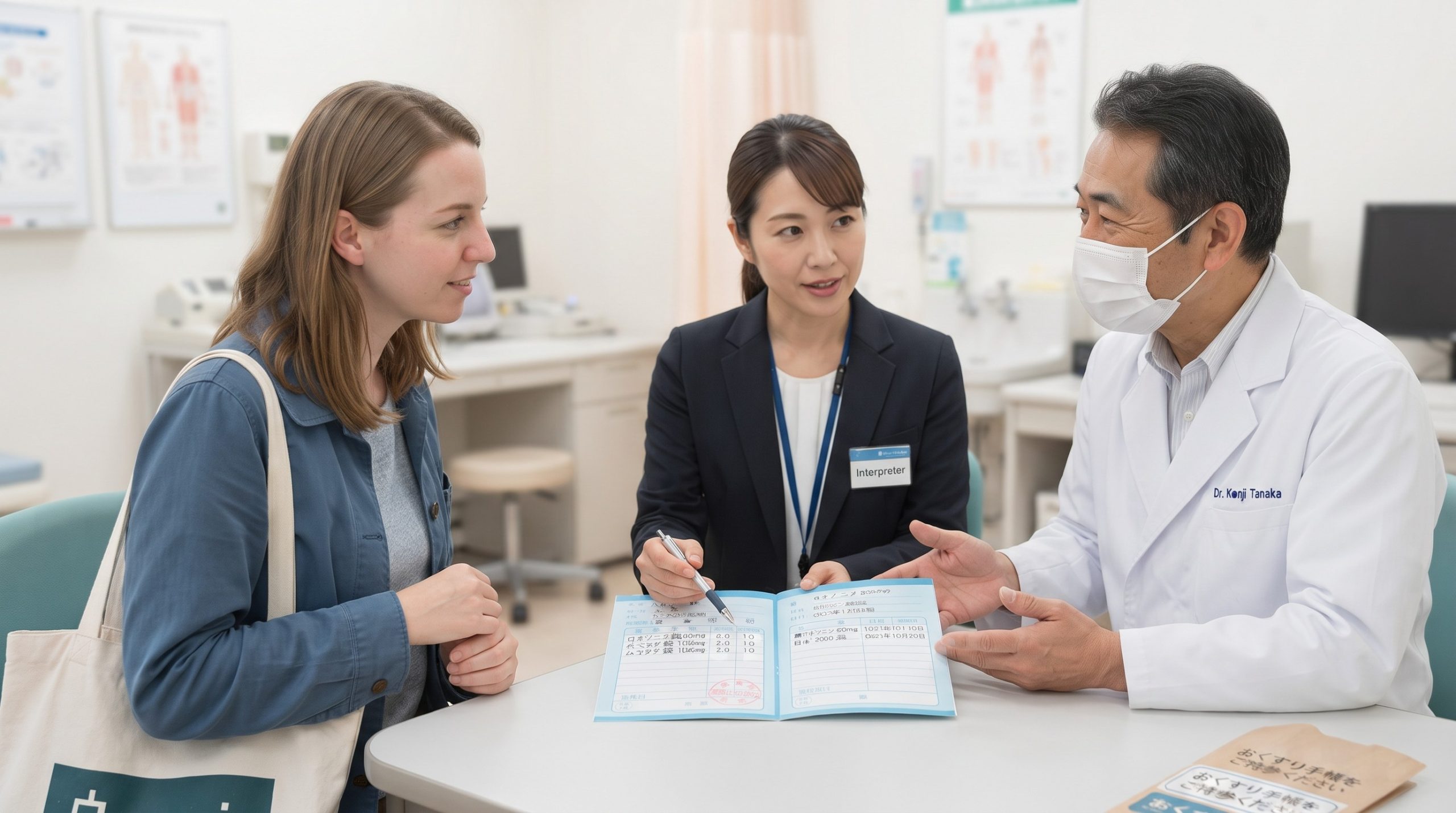
An Okusuri Techō is a medicine record that helps collect information about prescribed medicines in one place. Traditional paper notebooks remain common, while electronic medicine-notebook apps are also supported under MHLW guidance. For international patients, it serves as a critical bridge between healthcare systems.
What it records
Medicine name, dose, directions, dispensing history and other information needed to understand your current treatment. This includes prescription medicines, OTC medications, and dietary supplements.
What else to include
Allergies, previous side effects, relevant conditions, overseas medicines and other information that may affect safe prescribing. Critical for preventing dangerous drug interactions.
Why the Okusuri Techō Matters for Your Safety
- Interaction checking A pharmacist can compare new medicines with what you are already taking, preventing potentially dangerous combinations.
- Duplicate therapy It reduces the risk of two different clinics prescribing overlapping medicines without realising it.
- Allergy and adverse-reaction history Important past reactions can be visible before another medicine is prescribed or dispensed.
- Emergency continuity Government guidance recommends keeping the notebook available because medication information can be important during emergencies or disasters.
- Communication between providers It gives a new clinic or pharmacy a practical medication history even when they do not share the same local system.
- International patient continuity For expatriates and temporary residents, it documents your full medication history in one system both providers can access.
Use one consolidated record. Japanese government guidance recommends avoiding separate notebooks for each hospital or pharmacy because fragmented records make it harder to see the complete medication picture and increase safety risks.
Paper Okusuri Techō or Electronic App?
📄 Paper Okusuri Techō
- Widely recognized at any clinic or pharmacy
- Free or low-cost – government materials indicate these are issued free to pharmacy users
- No technology required – bring it to any visit
- No battery or login needed
- Easy to show instantly to healthcare staff
📱 Electronic Okusuri Techō
- Smartphone app management of medicine history
- Integration with MyNaPortal for connected health records
- Additional health tracking such as blood pressure or glucose
- MHLW-approved apps aligned with official guidelines
- Searchable and organized digital records
Best practice: Many patients maintain both a paper notebook for clinic visits and a digital record for personal tracking. This combines accessibility with organization.
Electronic Prescriptions: A Complement, Not a Replacement
Japan's electronic prescription system (electronic prescription, e-prescription) allows participating medical institutions and pharmacies, with patient consent, to view medication information registered in the system. This improves information sharing, but the Ministry of Health, Labour and Welfare (MHLW) still indicates the medicine notebook remains useful.
One reason is that not all medicine information appears in the same way or at the same speed:
- OTC medicines are not automatically part of the electronic prescription record
- Non-participating facilities may not have information immediately reflected
- Overseas medicines may not be included in the system
- Previous overseas treatment records may not be accessible
Think of the Okusuri Techō as your patient-controlled medication summary, while the electronic prescription system is a healthcare-system record. They complement each other rather than being identical.
What Should International Patients Add to Their Okusuri Techō?
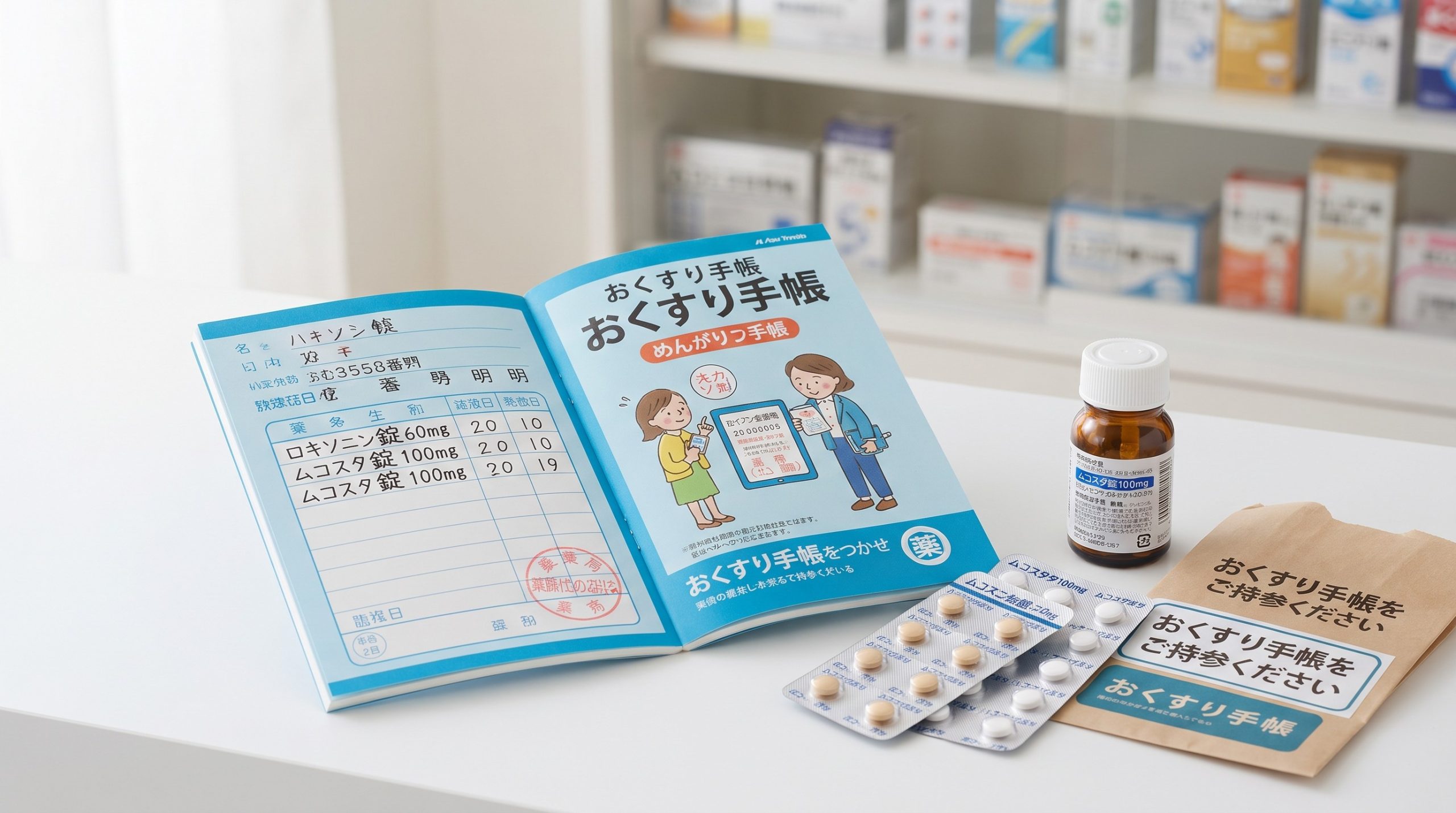
If you have been taking medicines outside Japan, document the complete information in your Japanese medicine notebook. Use both the generic (active ingredient) name and the overseas brand name.
How to Use Your Okusuri Techō Well
- Bring it every time Show it at clinics, hospitals and pharmacies, not only when you expect a new prescription. Even routine visits are opportunities to ensure your record is current.
- Keep one main record A consolidated history is more useful than separate notebooks for different providers. Doctors and pharmacists can only help you prevent interactions if they see the complete picture.
- Add OTC medicines and supplements These may not automatically appear in prescription systems but can still matter for interactions. Over-the-counter pain relievers, cold medicines, and herbal supplements are often overlooked but can cause serious interactions.
- Record allergies and previous reactions Keep this information prominent and update it when something changes. This is one of the most critical safety elements.
- Keep it accessible when travelling Medication information can be useful if you need unexpected or emergency care, especially when travelling between regions or internationally.
- Update it after each clinic visit Make sure the pharmacy or clinic stamps it with the date, medicine name, dose, and dispensing information before you leave.
Ensure Your Medication History Is Accurate in Japanese
International patients often face challenges translating complex overseas medical histories. Errors in translation can lead to dangerous drug interactions or missed conditions. MedicTranslate can translate prescriptions, treatment summaries and medication lists so the relevant information is clear to Japanese healthcare professionals.
Frequently Asked Questions
What is an Okusuri Techō?
It is a personal medicine record used in Japan to keep a history of dispensed medicines and other relevant medication information so doctors and pharmacists can review what you are taking. It includes prescription medicines, OTC medications, allergies, and past adverse reactions.
Can I get a paper medicine notebook at a pharmacy?
Yes. MHLW materials describe the paper medicine notebook as generally issued free to pharmacy users. Practices can vary by location, so ask the pharmacy if you do not already have one. Some may be available in multiple languages.
Should I have more than one medicine notebook?
No. Government guidance recommends keeping your information together rather than having separate notebooks for different hospitals or pharmacies, because a consolidated record makes interaction and duplication checks more useful and safer.
Do I still need an Okusuri Techō if I use My Number and electronic prescriptions?
Yes, it remains useful. MHLW notes that electronic-prescription and My Number information does not necessarily include every OTC medicine or every immediately available record, so the medicine notebook remains relevant as a complete personal record.
Can I write overseas medicines in it?
Absolutely. Recording your overseas medicines, allergies and past reactions can help a Japanese doctor or pharmacist understand your complete medication history. Use the active ingredient name as well as the brand name where possible, and include the dosage and reason for treatment.
What if I don't speak Japanese?
Professional medical translation of your medication list is strongly recommended. This ensures that your overseas medical history is accurately communicated to Japanese providers and prevents misunderstandings that could lead to unsafe prescribing decisions. MedicTranslate offers translation services specifically for this purpose.
Is the medicine notebook required by law?
The notebook is not legally mandatory, but using one is strongly encouraged by government health agencies and is considered a best practice for medication safety in Japan. It is a patient safety tool rather than a legal requirement.
This article provides general educational information reviewed on 28 September 2026 and based on official MHLW and PMDA guidance. A medicine notebook is an information and communication tool; it does not replace medical review or professional advice. Always follow the instructions of the prescribing clinician and dispensing pharmacist. This content is not medical advice. If you have specific questions about your medications or health, consult with your healthcare provider or a qualified medical professional in Japan.