
Medical Certificates (Shindansho) in Japan: Getting the Right Document for Work, School, Insurance and Immigration
A medical certificate in Japan (診断書, shindansho) is a formal document issued by a doctor for work, school, insurance, administrative procedures or other evidence of a medical condition. In practice, the organisation receiving it usually decides the exact form and wording it needs.
Quick answer
Confirm the recipient’s requirements before asking the clinic for a certificate. Japanese law requires the doctor to personally examine you before issuing a diagnosis certificate, and fees and turnaround are set by each medical institution, not by one national price.
Already have a Japanese medical certificate that needs to be used overseas? Get a fixed quote before any work begins.
Request a translation quoteOn this page
Who can issue a medical certificate in Japan?
Under Japan’s Medical Practitioners Act (医師法), a doctor who has examined a patient must not refuse a request for a diagnosis certificate without a justifiable reason (Article 19).
The same Act prohibits a doctor from issuing a diagnosis certificate without personally examining the patient (Article 20). In practice, therefore, you need a consultation with the Japanese doctor who will sign the certificate.
Overseas records alone are not a substitute for a Japanese examination. They can be useful clinical background, but the certificate is issued on the Japanese doctor’s own examination and judgement.
Common documents people call a “medical certificate” in Japan
診断書 Shindansho
Usually records the diagnosis, examination findings, treatment or period of rest or restriction relevant to the purpose.
健康診断書 Kenkō shindansho
A health-check certificate requested by an employer, school or other organisation. It is different from a diagnosis certificate.
Insurance / employer form
Insurers and employers often require their own form. A free-text certificate may not satisfy them.
Administrative certificate
Visa, pension, disability, school, sporting and other procedures may each specify different medical evidence.
Medical certificate fees and timing vary by institution
Medical certificates are usually charged as a separate document fee rather than as insured treatment. There is no single national price for a shindansho: the amount depends on the institution, the complexity of the certificate and whether a designated form must be completed.
Turnaround also varies. For example, a small clinic may prepare a simple certificate quickly, while a hospital documents office may need several business days or longer. Ask for the fee and expected completion date before you submit the request.
An MHLW expert meeting on workers’ compensation certificate forms (January 2026) reviewed document fees using a survey of medical institutions and discussed separate fee levels for different certificate types. Treat any generic price range you see online as indicative only.
Medical certificate in Japan: English or translated Japanese?
Some Japanese medical institutions can issue documents in English; others cannot, and an English certificate may carry a separate fee or longer turnaround. For overseas use, a predictable route is often:
- Get the certificate the doctor is comfortable issuing. Often this is the institution’s Japanese form.
- Confirm the recipient’s translation standard. Ask whether an ordinary professional translation, a certified translation, notarisation or another format is required.
- Translate the final signed document. Do not translate a draft if the doctor may still change the wording.
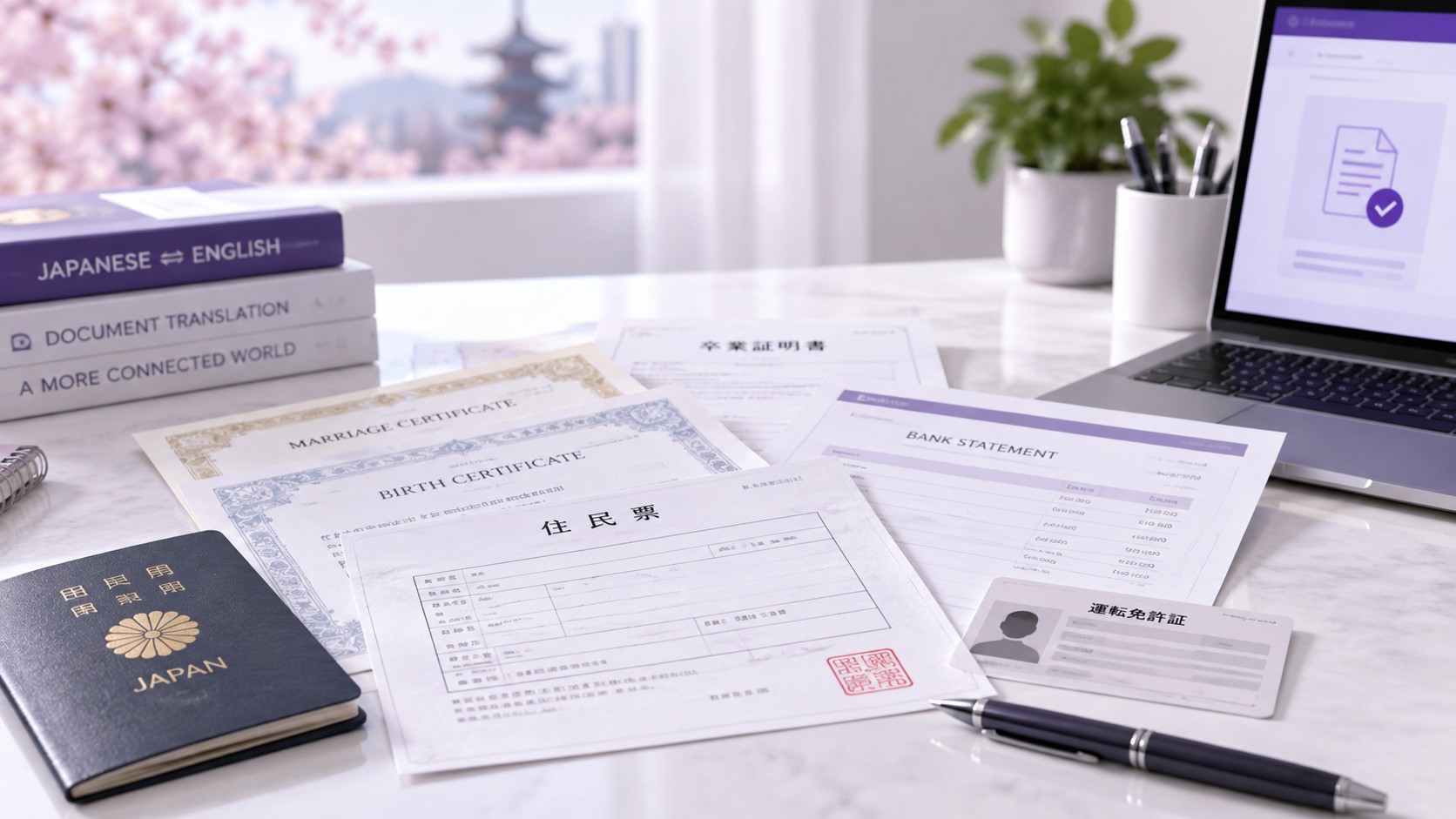
Foreign-language documents for Japanese immigration procedures
Immigration Services Agency guidance for residence-status procedures, such as the Temporary Visitor page, states that documents written in a foreign language must be submitted with a Japanese translation. However, the exact supporting documents depend on the application, so check the page for your own procedure.
Do not assume every Japanese administrative procedure requires notarisation or an apostille. These are purpose-specific requirements; confirm them with the receiving authority.

Practical steps to get a medical certificate in Japan
Need help with a Japanese consultation? A medical interpreter can support communication with the doctor. Interpreters do not give medical advice.
See interpreter servicesNeed a Japanese medical certificate translated?
MedicTranslate translates medical certificates, health-check reports, insurer forms and supporting medical documents between Japanese and English, to the standard the receiving organisation asks for.
- Human-validated translation, standard delivery from 72 hours
- Price confirmed before work begins
- Notarisation and apostille coordination where required
Secure document process · Reply within 1–3 business days · Kobe-based, document support Japan-wide
Frequently asked questions
What is a shindansho?
A shindansho (診断書) is a medical certificate issued by a doctor to record a diagnosis, examination findings or other medical information needed for a particular purpose, such as work, school, insurance or an administrative procedure.
Can a Japanese doctor issue a medical certificate without examining me?
As a general rule, no. Article 20 of the Medical Practitioners Act prohibits a doctor from issuing a diagnosis certificate without personally examining the patient. Overseas records can support the consultation but do not replace the examination.
Can a doctor refuse to issue a medical certificate?
Article 19 of the Medical Practitioners Act states that a doctor who has examined a patient must not refuse a request for a diagnosis certificate without a justifiable reason.
How much does a medical certificate cost in Japan?
There is no single national price. Certificates are usually charged as a separate document fee, and the amount varies by clinic or hospital, certificate type and whether a designated form must be completed. Ask the institution for the fee before you request it.
Does Japanese immigration require a translation of foreign-language documents?
Immigration Services Agency guidance for procedures such as the Temporary Visitor status states that documents written in a foreign language must be submitted with a Japanese translation. Exact requirements depend on the application, so check the page for your procedure.
Should I ask the clinic for an English certificate or translate the Japanese one?
Some institutions can issue English certificates, often for an extra fee or with a longer wait. Where they cannot, a common route is to obtain the final signed Japanese certificate and have it professionally translated to the standard the receiving organisation requires.
This article provides general information reviewed on 29 September 2026. It is not medical, legal or immigration advice. Certificate wording, fees, turnaround times and translation, certification or notarisation requirements vary by institution and receiving organisation, so confirm them directly before ordering a certificate or translation. MedicTranslate provides translation, interpreting and coordination services; it does not issue medical certificates or decide whether a recipient will accept a document.