
Referral Letters in Japan: The ¥7,000+ Large-Hospital Fee Explained
Japan encourages patients to start routine care at a clinic and move to a large hospital when specialist or hospital-level care is needed. At certain large hospitals, arriving without a referral letter can trigger an additional selective treatment fee on top of ordinary medical charges. Here is how the fee works, how to get a referral letter in Japan, and what to prepare.
Quick answer
At hospitals covered by Japan's non-referral fee framework, a first visit without an appropriate referral can attract an additional charge of at least ¥7,000 for medical care or ¥5,000 for dental care. Many hospitals publish tax-inclusive amounts of ¥7,700 and ¥5,500, and some charge more. Starting at a clinic, which can issue a referral letter (紹介状) if hospital care is needed, usually avoids the charge.
Have medical records from overseas? Translating the relevant summary before your first appointment can make the consultation and any Japanese referral much clearer.
Medical document translationOn this page
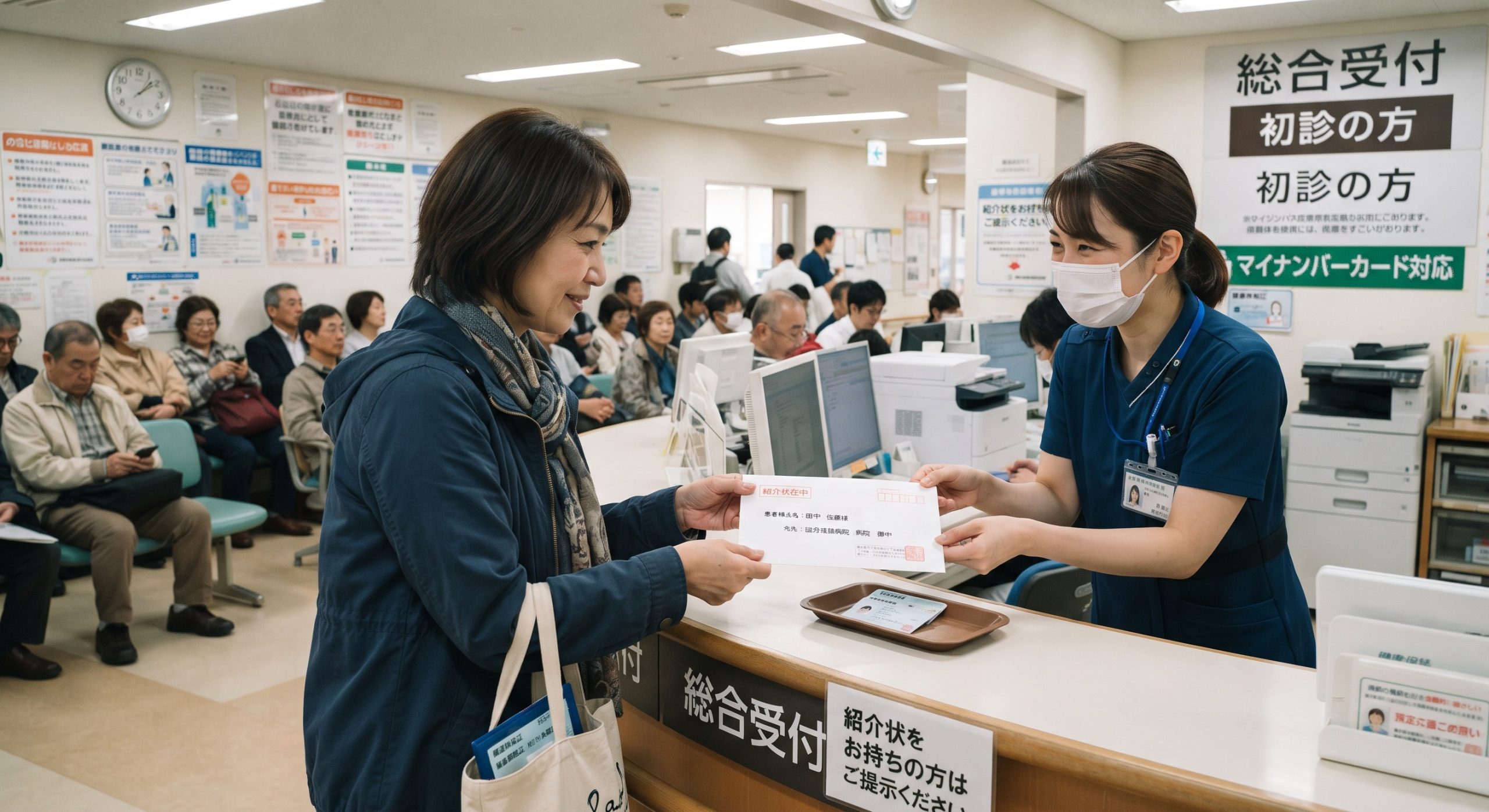
Clinic or hospital: what is the difference?
Clinic 診療所・クリニック
Legal definition: 0–19 beds
Often focused on a specialty such as internal medicine, paediatrics, dermatology, ENT or orthopaedics. Many clinics see patients directly without a referral.
Hospital 病院
Legal definition: 20 or more beds
Large hospitals provide broader specialist, diagnostic and inpatient services. Certain designated large hospitals are subject to the non-referral fee framework.
The ¥7,000+ selective treatment fee
Under MHLW's framework, in its current form since 1 October 2022, specified large hospitals must collect an additional amount from certain first-time patients who attend without a referral. The national amounts are at least ¥7,000 for medical departments and ¥5,000 for dental departments. This charge is not covered by health insurance.
| Visit type | Medical | Dental | Important note |
|---|---|---|---|
| First visit without referral | At least ¥7,000 | At least ¥5,000 | Many hospitals display ¥7,700 / ¥5,500 including consumption tax; some charge more. |
| Return visit after being referred back to community care | At least ¥3,000 | At least ¥1,900 | Applies when the hospital has referred you back to a clinic but you keep attending the hospital. |
Not every hospital is the same. The mandatory scheme applies to specified large hospitals, and actual tax-inclusive charges can vary. Emergencies are generally exempt. Check the hospital's website before attending.
How to get a referral letter
- Start at an appropriate clinic For general adult symptoms, internal medicine (内科) is a common starting point when you are unsure which specialty is needed.
- Bring your relevant history Take current medicines, previous results and any overseas medical summary.
- The doctor assesses whether hospital-level care is needed If so, the doctor may prepare a referral letter (紹介状 / 診療情報提供書) for the hospital or specialist.
- Confirm how the hospital accepts referrals Some hospitals require an appointment or ask the referring clinic to send information in advance.
- Bring the referral and identification to the hospital Keep the sealed referral together with your insurance information and relevant medical records.
What if your referral or medical summary is from overseas?
An overseas doctor's letter can be very useful clinically, but whether it satisfies a Japanese hospital's non-referral-fee exemption is facility-specific. Do not assume that a foreign letter automatically waives the charge.
Where the document is important to diagnosis or treatment, a Japanese translation can help the receiving clinic understand the diagnosis, medication history, investigations and reason for referral.
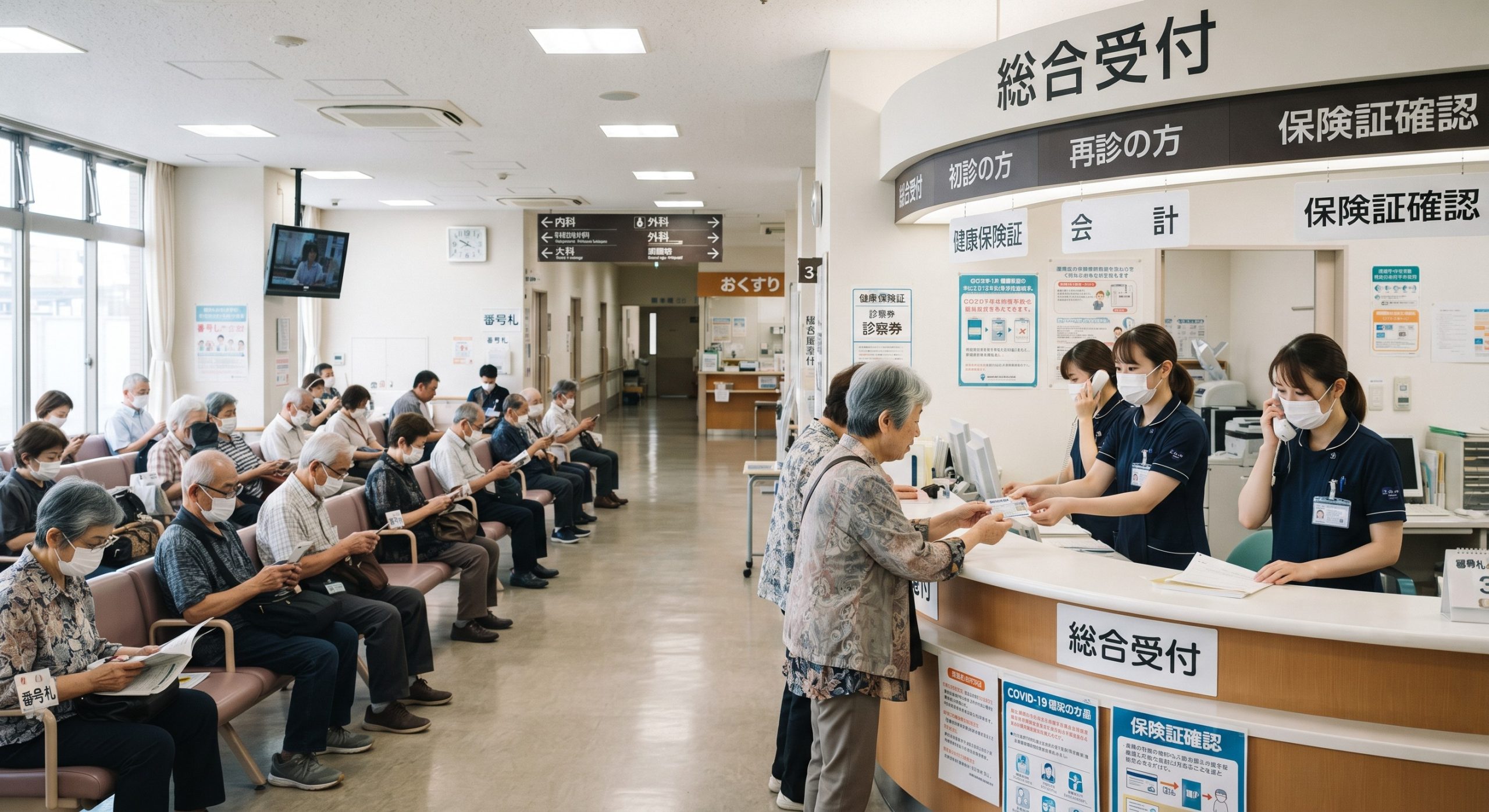
What to prepare for the first clinic appointment
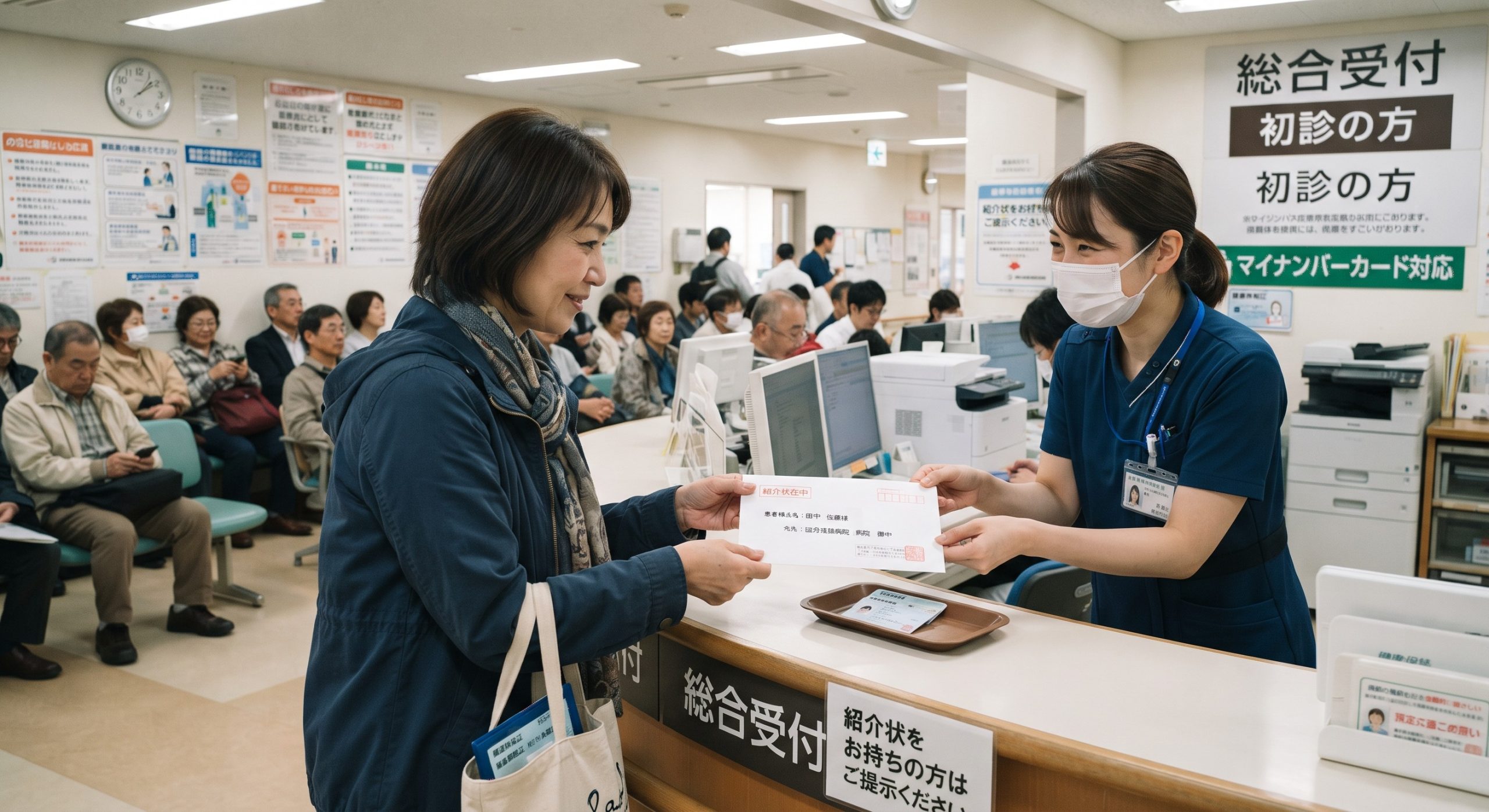
Need help preparing for a Japanese referral?
MedicTranslate can translate your medical summary, help organise the relevant records and support communication with a clinic or hospital. We do not decide whether a referral is medically required; that decision belongs to the treating clinician.
- Human-validated medical translation, standard delivery from 72 hours
- Price confirmed before work begins
- Interpreter support in person across Kansai and beyond and remotely Japan-wide
Reply within 1–3 business days · Secure document process · Kobe-based
Frequently asked questions
What is a shōkaijō?
A shōkaijō (紹介状), formally a 診療情報提供書, is a referral document prepared by a doctor or dentist to transfer relevant clinical information to another medical institution.
Do all Japanese hospitals charge ¥7,000 without a referral?
No. The mandatory selective-treatment scheme applies to specified categories of large hospitals. Other hospitals may have different arrangements. Confirm the hospital's current policy before attending.
Is the fee exactly ¥7,000?
The national framework sets a medical first-visit amount of at least ¥7,000 and a dental amount of at least ¥5,000 for relevant hospitals. Many hospitals display ¥7,700 and ¥5,500 including consumption tax, and some charge more.
Will an overseas referral letter automatically waive the fee?
Not necessarily. Whether a foreign referral satisfies the hospital's referral-fee rules is facility-specific. Confirm with the hospital. A translated overseas medical summary can still be clinically valuable.
What is the difference between a clinic and a hospital in Japan?
Under the Medical Care Act, a hospital has 20 or more beds. A clinic has no inpatient beds or up to 19 beds.
This article provides general information reviewed on 29 September 2026. It is not medical, insurance or legal advice. Hospital referral rules, exemptions, tax treatment and actual charges vary by institution and change, so confirm the receiving hospital's current policy before attending. Whether a referral is needed is a clinical decision for your doctor. MedicTranslate provides translation and coordination services.