
Uninsured in Japan: What a Doctor’s Visit Really Costs and How to Claim It Back
If you are uninsured in Japan as a short-term visitor, you are generally outside the Japanese public health-insurance system. A clinic or hospital will usually treat you as a self-pay patient, and the amount charged can vary by medical institution. This guide explains how that pricing works, how to pay, and how to prepare a travel insurance claim.
Quick answer
Do not assume an uninsured visitor simply pays 100% of the Japanese insurance fee schedule. Self-pay pricing differs by facility, and since March 2026 some approved hospital operators can charge visitors up to 30 yen per fee point. Ask about likely costs before non-emergency treatment, keep every receipt and document, and contact your travel insurer early.
Need a clinic that can communicate with an international patient? Browse our list of foreign-friendly clinics in Japan.
Find foreign-friendly careOn this page
Uninsured in Japan: who is usually treated as self-pay?
Tourists and other short-term visitors are generally not enrolled in Japan's public health-insurance schemes. If no other applicable coverage arrangement exists, the medical institution bills the visitor directly for the full cost of care.
Emergency? Do not delay urgent care to compare prices. Call 119 for a serious or life-threatening emergency.
There is no single nationwide price for uninsured visitors
A common assumption is that every uninsured visitor pays the national insurance fee schedule at 10 yen per point. In practice, however, self-pay (free-practice) patients are charged according to each medical institution's own self-pay policy.
A 2026 change adds another layer. Under MHLW notices dated 31 March 2026, certain social medical corporations and related approved entities may set a separate fee for visiting foreign patients without Japanese public insurance. That fee can range from the standard insurance rate up to three times that amount, capped at 30 yen per medical fee point, and must stay within the regional standard price confirmed by the authorities.
That rule does not mean every hospital charges 30 yen per point. Instead, it sets a ceiling for the organisations it covers.
For a non-emergency appointment, ask reception whether you will be billed under the ordinary self-pay price, a foreign-patient price or another published schedule.
Paying the bill at the clinic or hospital
If you are uninsured in Japan, expect to pay before you leave. JNTO advises international visitors to ask reception for a general estimate of the treatment cost before care where practical.
Payment methods vary. According to JNTO, credit cards are mainly accepted at major hospitals, while clinics generally take cash only. Therefore, carry enough cash for a clinic visit.
No cashless insurer arrangement
You will generally need to settle the medical institution's bill yourself and then claim from your insurer according to your policy.
Cashless travel-insurance support
Some insurers or assistance companies can arrange direct billing with a participating medical institution. This is policy- and facility-specific.
Uninsured in Japan? Claiming it back on travel insurance
The Japan Tourism Agency and JNTO strongly encourage visitors to hold private medical or travel insurance, because serious treatment and repatriation can become very expensive.
- Call the insurer or assistance company early. They may direct you to a facility, arrange interpretation or discuss payment guarantees.
- Confirm pre-authorisation requirements. Some policies require contact before admission, imaging, surgery or other expensive treatment.
- Ask what evidence the insurer requires. Do not assume every insurer wants the same certificate or form.
- Keep copies of everything. Photograph receipts and documents before sending originals overseas.

Documents to keep for a claim
- Official medical receipt
- Itemised statement or breakdown of treatment, if issued
- Pharmacy receipt and prescription information
- Medical certificate or insurer form, if your policy requires one
- Proof of payment
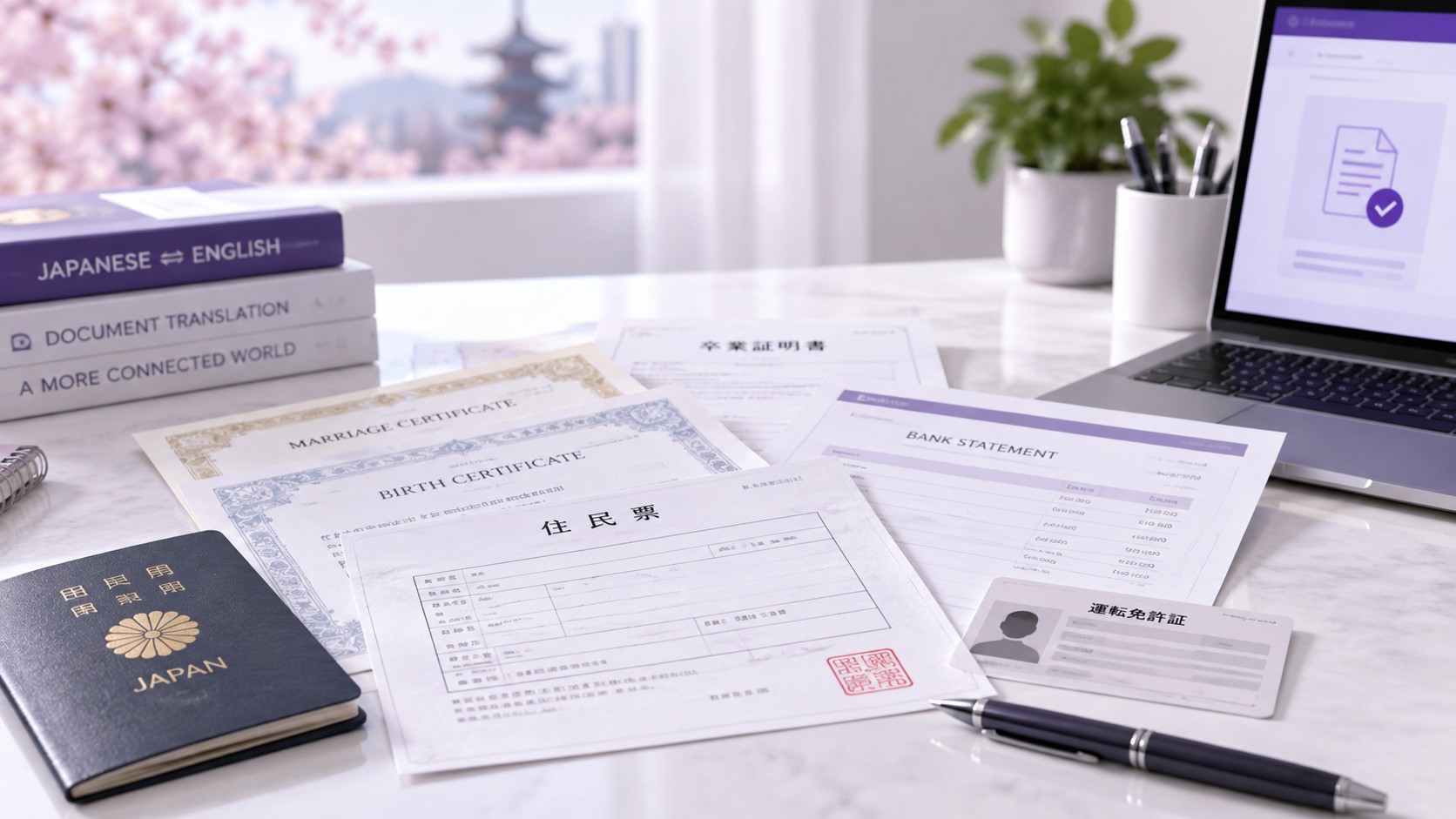
- Japanese-to-English translation, if your insurer requests one
Before you travel to Japan uninsured
- Check the policy's medical-expense limit and exclusions.
- Read the pre-existing-condition wording carefully.
- Save the insurer's 24-hour assistance number.
- Carry a concise medication and medical-history summary.
- Remember that cashless treatment is not guaranteed at every Japanese facility.
Need Japanese medical documents translated for an insurer?
MedicTranslate translates medical certificates, treatment summaries, receipts and supporting healthcare documents when your insurer asks for an English version, and can arrange a medical interpreter for appointments.
- Human-validated medical translation
- Price confirmed before work begins
- Secure document process
Reply within 1–3 business days. Standard delivery from 72 hours. We translate and coordinate; we do not provide medical advice or decide insurance claims.
Frequently asked questions
Are short-term visitors covered by Japanese public health insurance?
Short-term visitors are generally not enrolled in Japanese public health insurance and should expect to be treated as self-pay patients unless another applicable arrangement exists.
Is there one national price for an uninsured foreign visitor?
No. Self-pay pricing varies by medical institution. Under MHLW notices dated 31 March 2026, certain social medical corporations can set a visitor self-pay price of up to 30 yen per medical fee point, within regional-standard limits.
Should I ask the clinic about cost before treatment?
Yes, where the situation is not an emergency. JNTO advises visitors to ask reception for a general cost estimate before treatment. Emergency care should never be delayed for price enquiries.
Can I pay by credit card at a Japanese clinic?
Not always. JNTO notes that major hospitals usually accept credit cards, but many clinics accept cash only. Carry cash or ask reception before your appointment.
What documents should I keep for a travel insurance claim?
Keep the official receipt, any itemised statement, pharmacy receipts, proof of payment and any medical certificate or insurer form your policy requires. The exact evidence is insurer-specific.
Can travel insurance pay the hospital directly?
Some policies can arrange cashless payment or a payment guarantee with participating medical institutions, but this depends on the insurer, assistance company and hospital. Contact the insurer as early as possible.
This article provides general information reviewed on 29 September 2026. It is not insurance, financial, legal or medical advice. Medical fees vary by provider, and travel-insurance benefits, exclusions, evidence requirements and cashless arrangements depend on your policy. Confirm costs with the medical institution and claim requirements with your insurer. MedicTranslate provides translation and coordination services; it is not a healthcare provider or insurer and does not decide claims.