
Is Zyrtec Allowed in Japan? Cetirizine, Claritin and Allegra Explained
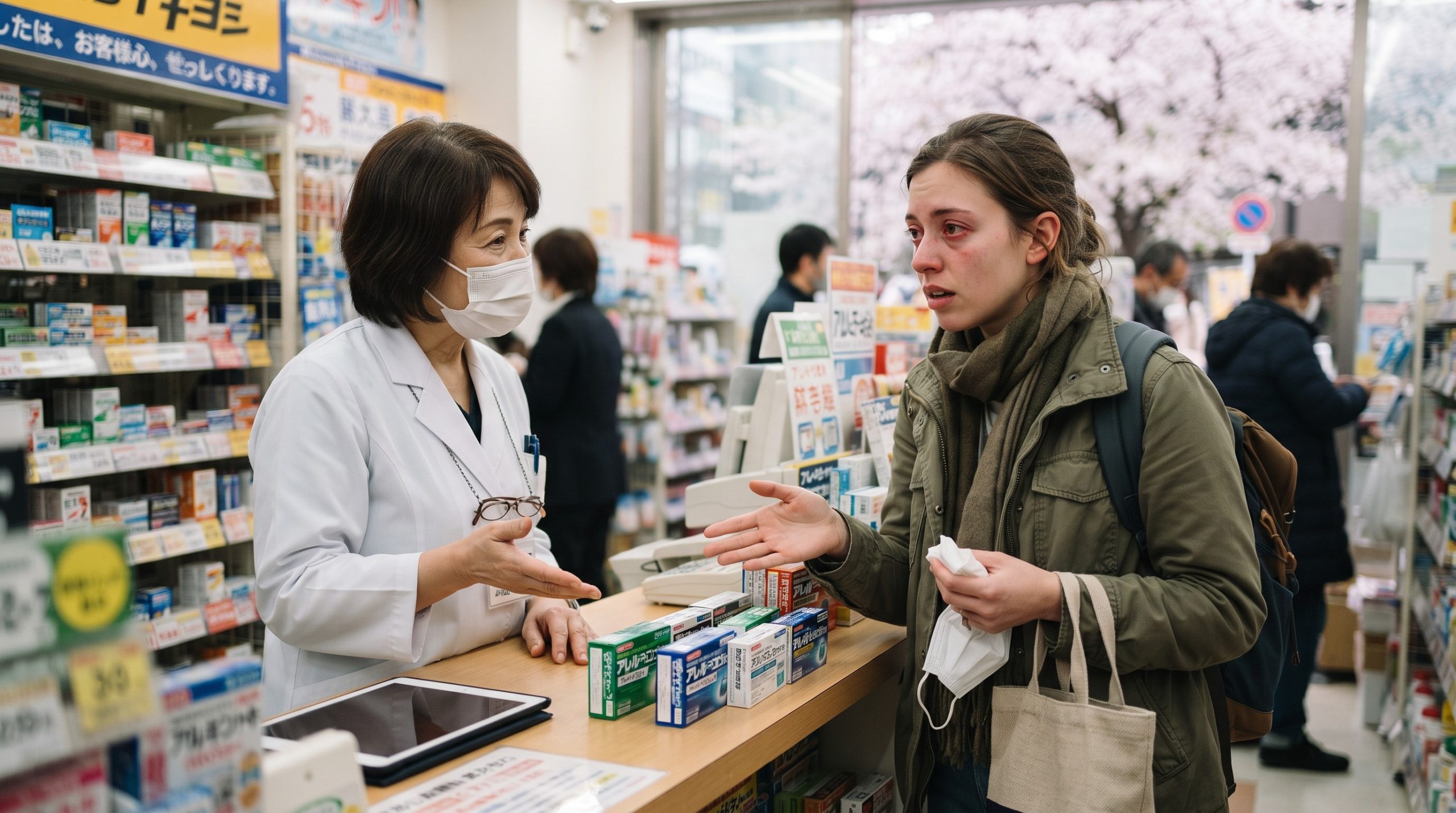
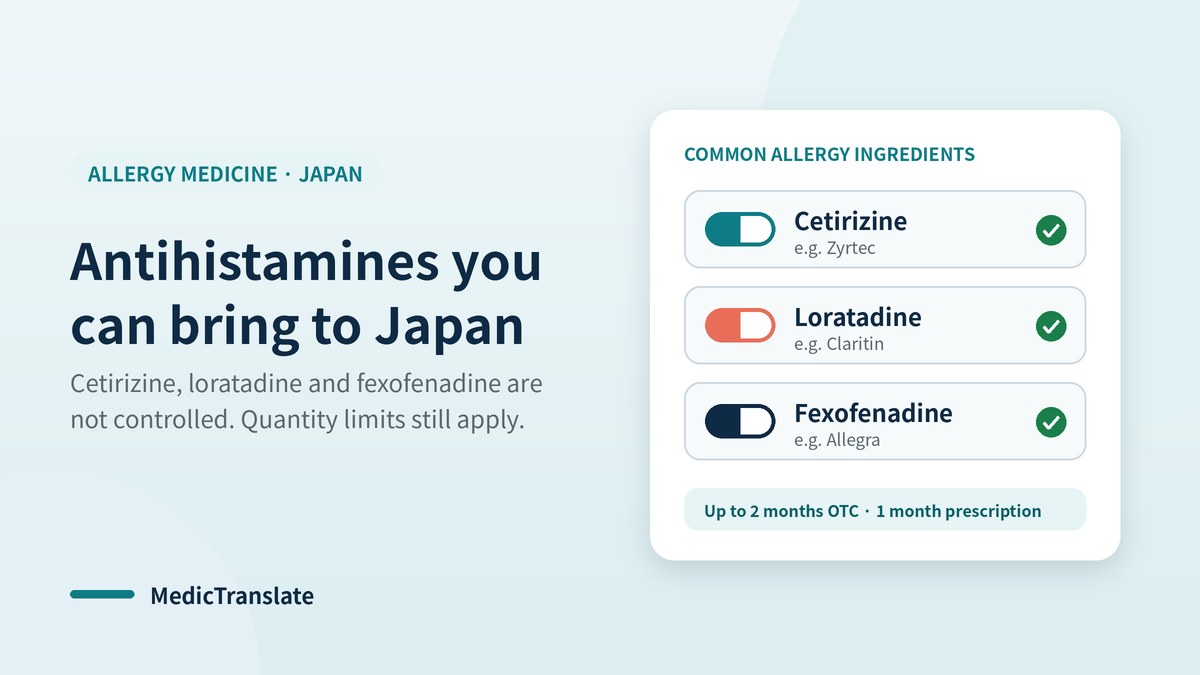
Is Zyrtec allowed in Japan? Yes. Cetirizine (Zyrtec), loratadine (Claritin) and fexofenadine (Allegra) are all used in Japan in prescription and over-the-counter products. What matters is the active ingredient and exact formulation of your product, especially if it also contains a decongestant.
Quick answer
Zyrtec (cetirizine), Claritin (loratadine) and Allegra (fexofenadine) are not prohibited or controlled in Japan. All three are sold in Japan, including as OTC products. How much you can bring without Import Confirmation depends on whether your product counts as a prescription drug (generally one month's supply) or another medicine (generally two months). Combination products containing pseudoephedrine need a separate check.
Not sure whether your allergy product is a plain antihistamine or a combination medicine?
Check my medicationOn this page
Is Zyrtec allowed in Japan? Cetirizine, loratadine and fexofenadine
Cetirizine セチリジン
Common overseas brand: Zyrtec
PMDA lists prescription Zyrtec (ジルテック) tablets, and cetirizine is also used in Class 2 OTC allergy products.
Loratadine ロラタジン
Common brand: Claritin
Prescription Claritin exists in Japan, and OTC Claritin EX is listed as a Class 2 medicine.
Fexofenadine フェキソフェナジン
Common brand: Allegra
Prescription Allegra and generic fexofenadine are available, and OTC Allegra FX is a Class 2 medicine.
Japanese brands may look familiar, but check the formulation
Some Japanese products carry the same brand names you know from home. Even so, compare the active ingredients and strength before you rely on them.
A plain fexofenadine product, for example, is not the same thing as a combination product containing fexofenadine plus pseudoephedrine. Our guide to finding a Japanese OTC equivalent explains how to match products by ingredient.
When is Zyrtec allowed in Japan without Import Confirmation?
There is no blanket "two-month" rule for antihistamines. MHLW's personal-import exemption depends on how the medicine is classified:
| Type of medicine | Generally allowed without Import Confirmation |
|---|---|
| Prescription drug (including poisonous and powerful drugs) | Up to one month's supply |
| Other medicines and quasi-drugs | Up to two months' supply |
| Topical products (creams, sprays, eye drops) | Up to 24 items per product |
These limits apply only if the product is not separately restricted. Above them, you need Import Confirmation (formerly yakkan shoumei) before you travel.
If your antihistamine was prescribed overseas, do not assume that Japanese OTC availability gives your prescription-labelled product the two-month allowance. Check the exact product and quantity.
Combination allergy products need a separate check
Products sold under familiar allergy brands (often with a "-D" suffix) may contain pseudoephedrine as a decongestant. That changes the rules.
Do not treat pseudoephedrine products as plain cetirizine, loratadine or fexofenadine. Pseudoephedrine is one of the ingredients covered by Japan's designated misuse-prevention medicine rules in force from 1 May 2026. Products containing more than 10% pseudoephedrine are stimulant raw materials, which have strict personal-import controls.
Read more in our guide to controlled medicines in Japan.
Buying an antihistamine locally
- Know the active ingredient. Saying cetirizine, loratadine or fexofenadine is more useful than only saying Zyrtec, Claritin or Allegra.
- Know your usual strength. Japanese products may use a different strength or dosing schedule.
- Show the pharmacist your current medicines. This matters most if you take sedating medicines or have other medical conditions.
- Read the Japanese label. Age limits, precautions and dosing may differ from your home-country product.
Unsure about your exact allergy product?
We check your product by active ingredient, strength, dosage form and quantity against the published MHLW rules, and help you prepare an Import Confirmation application if you need one.
- Price confirmed before work begins
- Reply within 2–3 business days (or sooner)
- Secure document process
MedicTranslate is not a healthcare provider or customs authority. We do not give medical advice or guarantee customs approval.
Frequently asked questions
Is Zyrtec (cetirizine) allowed in Japan?
Yes. Cetirizine is not a narcotic, psychotropic or stimulant in Japan. PMDA lists prescription Zyrtec tablets, and cetirizine is also sold in Japanese OTC allergy products. Plain cetirizine products are generally fine to bring within the personal-import quantity limits.
Can I buy Claritin in Japan?
Yes. Loratadine is available in Japan as prescription Claritin and as the OTC product Claritin EX, which PMDA lists as a Class 2 OTC medicine. Check the strength and dosing on the Japanese label, as it may differ from your home product.
Can I buy Allegra in Japan?
Yes. Fexofenadine is available in prescription and generic products, and Allegra FX is sold over the counter as a Class 2 OTC medicine according to PMDA listings.
Can I bring two months of Zyrtec to Japan?
Not automatically. Under MHLW personal-import rules, prescription drugs are generally limited to one month's supply and other ordinary medicines to two months' supply without Import Confirmation. Which limit applies depends on the exact product, so check before you travel.
What if my allergy medicine also contains pseudoephedrine?
Check it separately. Pseudoephedrine is covered by Japan's designated misuse-prevention medicine rules in force from 1 May 2026, and products containing more than 10% pseudoephedrine are treated as stimulant raw materials, which are subject to strict import controls.
Can MedicTranslate tell me if my exact product is allowed?
We can check your product's ingredients, strength and quantity against the published MHLW import rules and help you prepare the paperwork. We do not give medical advice or guarantee customs approval; the final decision rests with the Japanese authorities.
This article provides general information reviewed on 29 September 2026. It is not medical, pharmaceutical or legal advice. Product ingredients, strengths, classifications, import limits and availability change. Check the exact label, ask a pharmacist or doctor before changing products, and confirm import requirements with MHLW or the Regional Bureau of Health and Welfare before you travel. MedicTranslate provides translation and coordination services.
- MHLW: Personal import quantity limits
- MHLW: Designation of misuse-prevention medicines (in force 1 May 2026)
- Tokyo Metropolitan Government: Stimulant raw materials list
- PMDA: Zyrtec (cetirizine) prescription product information
- PMDA: Class 2 OTC allergy listings (incl. Claritin EX)
- PMDA: OTC rhinitis listings (incl. Allegra FX)