
Asked to Bring an Interpreter to Hospital in Japan? What to Do Next
If a clinic or hospital has asked you to bring an interpreter to hospital in Japan, you are not alone, and it does not mean you will be refused care. It usually means the hospital has no interpreter for your language at that time. This guide explains why it happens, your options, and how to prepare so the visit goes smoothly.
Quick answer
Hospitals ask you to bring an interpreter when they cannot provide one for your language, date or type of appointment. First, ask the hospital whether it has its own remote interpreting or takes part in a local interpreter programme. If not, book an interpreter early, ideally a week or more ahead, confirm the time and department, and prepare a short written summary of your symptoms, history and medication. For consent, surgery or admission, a trained medical interpreter is safer than a friend or family member.
Hospital asked you to bring an interpreter? Tell us the hospital, department, date and language. We reply within 1–3 business days.
Book an interpreterOn this page
- Why hospitals ask you to bring an interpreter to hospital in Japan
- Your options when told to bring an interpreter to hospital in Japan
- How to bring an interpreter to hospital in Japan: step by step
- What to prepare before you bring an interpreter to hospital in Japan
- On the day: working well with your interpreter
- Frequently asked questions
Why hospitals ask you to bring an interpreter to hospital in Japan
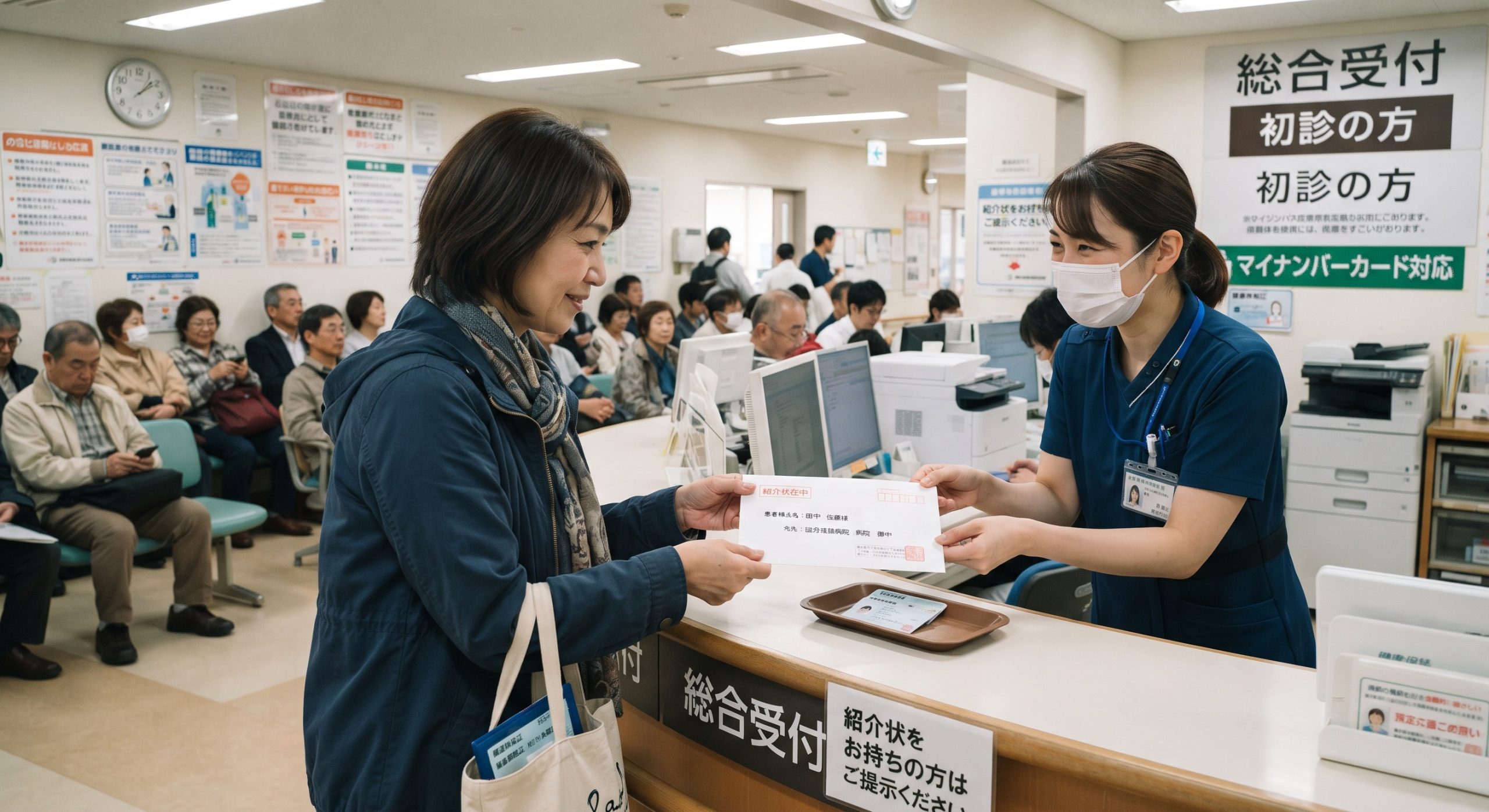
Japanese hospitals must be able to explain diagnoses, tests and treatment clearly and get informed consent. However, many do not employ interpreters, and the MHLW manual for hospitals receiving foreign patients identifies a shortage of medical interpreters, particularly for less common languages, as a key challenge.
As a result, when staff cannot communicate safely in your language, they may ask you to bring an interpreter to hospital in Japan. This is common for:
- first visits to a specialist department;
- explanations of test results, surgery or anaesthesia;
- hospital admission, discharge and payment discussions;
- maternity care and children’s appointments.
Your options when told to bring an interpreter to hospital in Japan
The hospital’s own interpreting
Some hospitals use phone or video interpreting, such as Osaka Prefecture’s 24-hour remote service for registered facilities. A fee may apply with your consent.
A local programme
Some cities run free or low-cost programmes at participating hospitals, for example Kyoto City’s service at three hospitals.
A friend or family member
Fine for simple logistics, but they may lack medical vocabulary, and you may not want them hearing private details.
A professional medical interpreter
Booked for your exact date, department and language, in person or remotely.
Avoid relying on a child to interpret medical information. Ask the hospital what level of interpreting it expects, especially for consent discussions.

How to bring an interpreter to hospital in Japan: step by step
- Confirm what the hospital needs. Ask for the date, start time, department and how long the visit is likely to take. Also ask whether consent or test results will be discussed.
- Ask about in-house options. Does the hospital have a remote interpreter or a programme it can book, and is there a fee?
- Book early. Free programmes often need 5 or more days’ notice, and professional interpreters fill up too. A week or more is ideal.
- Tell the hospital who is coming. Let reception know an interpreter will attend, and whether it is in person or by video.
- Brief the interpreter. Share the department, the reason for the visit and any documents in advance, so they can prepare vocabulary.
- Arrive early. Registration at large hospitals can take 30 minutes or more.
Furthermore, if you are a visitor and have not yet chosen a hospital, JNTO’s search lets you filter medical institutions by language spoken.
What to prepare before you bring an interpreter to hospital in Japan
An interpreter conveys what you and the doctor say. Therefore, the clearer your information, the faster and safer the consultation. Prepare:
- your health insurance card or travel insurance details, plus passport or residence card;
- a referral letter, if you have one;
- a short written summary of symptoms, past illnesses, surgeries and allergies;
- a list of current medicines with doses, or the packets themselves;
- previous test results or reports, translated if possible;
- a list of questions you want answered.
In addition, write down anything you are unsure of during the visit, such as follow-up dates or how to take new medicine, and confirm it before you leave.
On the day: working well with your interpreter
- Speak in short sentences and pause so the interpreter can keep up.
- Talk to the doctor, not the interpreter.
- Say if you do not understand; the interpreter will ask the doctor to explain again.
- Remember the interpreter does not give medical advice or make decisions for you.
Finally, if the hospital asks you to sign forms, ask the interpreter to sight-translate the key points, and take a copy home.
Hospital asked you to bring an interpreter?
We arrange professional medical interpreters for outpatient visits, test results, admissions and consent discussions, in person across Kansai and beyond or remotely nationwide.
- English, Chinese, Arabic, Persian and 5 more ⇄ Japanese
- In person across Kansai and beyond, remote Japan-wide
- Quote within 1–3 business days
- Price confirmed before you book
Kobe-based · in person in Hyogo, Osaka and Kyoto · video and phone interpreting nationwide · interpreters do not give medical advice.
Frequently asked questions
Can a hospital in Japan refuse to see me without an interpreter?
In an emergency, hospitals provide care. For planned visits, a hospital may ask you to bring an interpreter or rearrange the appointment if it cannot communicate safely. Ask whether it has its own remote interpreting first.
Can a family member interpret at a Japanese hospital?
Often yes for simple matters, but family members may lack medical vocabulary and you may not want them hearing private details. For consent, surgery or test results, a trained medical interpreter is safer. Avoid using children as interpreters.
How much notice do I need to book an interpreter?
Book as early as possible, ideally a week or more ahead. Some free city programmes need at least 5 days, and professional interpreters can be fully booked at short notice.
Will the hospital charge for its own interpreter?
It may. The MHLW manual explains that interpreting is not part of insured treatment, so a hospital can charge separately after explaining the service and getting your consent. Ask before the visit.
Can the interpreter join by video?
Yes, if the hospital agrees. Remote interpreting by video or phone works well for short consultations and avoids travel fees. For admissions or complex procedures, in-person interpreting is usually better.
Does the interpreter give medical advice?
No. A medical interpreter conveys what you and the healthcare staff say. Diagnosis, advice and decisions come from the doctor and from you.
This article provides general information reviewed on 5 October 2026. It is not medical or legal advice. Free and low-cost interpreter programmes are run by municipalities, hospitals and non-profit groups, and their hospitals, languages, hours and fees change, so confirm the details with the programme or hospital before you rely on them. MedicTranslate interpreters convey what is said; they do not give medical advice, make clinical decisions or book treatment on your behalf.
- MHLW: Manual for medical institutions accepting foreign patients (外国人患者の受入れのための医療機関向けマニュアル)
- Osaka Prefecture: 24-hour multilingual remote medical interpreting service (大阪府24時間多言語遠隔医療通訳サービス)
- Kyoto City / Kyoto International Foundation (KCIF): Medical interpreter dispatching service
- Hiroshima International Center: Medical interpreter volunteer dispatch
- JNTO: Guide for when you are ill in Japan, with medical institution search