
Buying Children’s Fever and Pain Medicine in Japan: A Safety Guide for Parents
Children’s medicines in Japan vary by formulation, strength, active ingredient and permitted age. This guide explains what to check before buying or giving a product.

Key points
- Do not give a child an adult product by simply reducing the number of tablets.
- Check the exact active ingredients, strength, permitted age and package directions.
- Acetaminophen and paracetamol are the same ingredient, shown in Japanese as アセトアミノフェン.
- Many Japanese cold medicines contain several ingredients and may already include acetaminophen.
- Tell the pharmacist the child’s age, current weight, symptoms, allergies and everything already taken.
- Seek medical care when symptoms are severe, unusual, worsening or involve a very young or medically vulnerable child.
When self-treatment is not appropriate
Call 119 for a serious or life-threatening emergency in Japan. Seek urgent medical assessment if a child is struggling to breathe, difficult to wake, having a seizure, collapsing, showing signs of a severe allergic reaction, severely dehydrated, or becoming rapidly worse.
A fever medicine may improve discomfort, but it does not identify or treat the underlying cause of the illness. Do not delay assessment because the temperature temporarily falls after medicine.
What should you know before buying medicine?
A Japanese pharmacist or registered seller can give more useful guidance when the parent provides complete, specific information. Prepare the following before entering the pharmacy.
About the child
- Exact age and date of birth
- Current weight
- Known allergies or previous medicine reactions
- Medical conditions such as liver, kidney or heart disease
- Asthma or previous reactions to pain or fever medicines
About the illness
- Main symptom and when it started
- Measured temperature and how it was taken
- Other symptoms such as rash, cough, vomiting or pain
- Medicine already given, amount and exact time
- Whether the child is drinking, urinating and behaving normally
Acetaminophen and paracetamol for children in Japan
Acetaminophen and paracetamol are two names for the same active ingredient. In Japan, the ingredient is normally written as アセトアミノフェン.
Japanese OTC databases include child-appropriate acetaminophen products in several forms, but the permitted age and directions differ by product. Some are single-ingredient fever and pain medicines; others are combination cold products containing acetaminophen together with cough, allergy or decongestant ingredients.
For a broader ingredient guide, see Acetaminophen in Japan: Tylenol, Panadol, Calonal and OTC Options .
Common medicine forms parents may see
Japanese children’s medicines are available in different dosage forms. The correct choice depends on the child, the product and the professional advice provided.
Liquid or syrup
Useful when a child cannot swallow tablets. Concentrations vary, so use only the supplied measuring device and follow the exact label.
Granules or powder
Often supplied in sachets or measured quantities. Do not guess a partial dose or divide a packet unless the current label or a professional specifically instructs you to do so.
Chewable tablets
Some child and adolescent products are chewable, but age limits vary. Confirm that the child can safely use the product and that the ingredient is appropriate.
Suppositories
These may be used in certain situations, including when oral medicine is difficult. Obtain professional advice on the correct product and use.
Tablets
Many adult tablets are not authorised for younger children. Never assume that cutting or crushing an adult tablet creates a safe paediatric dose.
Combination cold medicine
These can contain acetaminophen plus several other ingredients. They should not be selected solely because the package says “for children”.
Why combination products require extra care
A child may receive too much of one ingredient when a parent gives a fever medicine and then adds a cough, cold or “all-in-one” product containing the same ingredient.
| What to check | Why it matters | What to do |
|---|---|---|
| Active ingredients | Different brands can contain the same medicine. | Check every ingredient, including アセトアミノフェン. |
| Age restriction | Products within the same brand family may have different age limits. | Use the age shown on the exact package, not another product from the same brand. |
| Drowsiness warning | Some cold medicines contain antihistamines or sedating ingredients. | Ask the pharmacist and follow all activity and supervision warnings. |
| Cough ingredients | Some products contain codeine-related or other cough-suppressing ingredients. | Do not assume a product is suitable because it is sold OTC. |
| Medicine already given | The same ingredient may already be in the child’s prescription or overseas medicine. | Show the pharmacist all products and the time of the last dose. |
Brand names can be misleading
A familiar brand family may sell products with completely different active ingredients. For example, an adult pain reliever may contain aspirin, while another product in the same broad brand family may contain acetaminophen. Always read the ingredient list.
Age, weight and measuring the medicine
Children’s medicine directions can be based on age, weight or both. Use the child’s current information and the directions for the exact product.
Confirm the child’s current weight
Do not rely on an old health record when the child has grown significantly.
Read the exact concentration
Two liquids with the same ingredient can contain different amounts in each millilitre.
Use the supplied device
Use the marked syringe, cup or spoon provided with the product. Do not use an ordinary kitchen spoon.
Record the time
Write down what was given, how much and at what time to prevent accidental early or duplicate dosing.
Do not improvise after vomiting
If the child vomits after a dose, ask a doctor or pharmacist before deciding whether to repeat it.
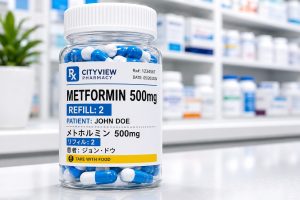
Useful Japanese phrases at the pharmacy
Giving the medicine safely
Do
- Read the package and insert each time.
- Check the child’s name if several children take medicines.
- Use the supplied measuring device.
- Record the product, amount and time.
- Keep medicines in the original container.
- Store them out of sight and reach of children.
Do not
- Use an adult product without professional advice.
- Combine two products before checking every ingredient.
- Guess a dose from an overseas product.
- Use a kitchen teaspoon for liquid medicine.
- Call medicine “candy” to persuade a child to take it.
- Continue self-treatment when symptoms are worsening.
If granules or liquid medicine are mixed with food or drink, use only a small amount that the child will consume completely. Do not mix medicine into a full bottle or large meal unless the pharmacist has confirmed that this is appropriate.
Bringing children’s medicine into Japan
A product sold for children overseas is not automatically unrestricted in Japan. The import classification depends on the full ingredient list, quantity and dosage form.
Combination cough, cold, allergy or “night-time” medicines require particular care because they may contain ingredients regulated differently in Japan.
Review MedicTranslate’s prohibited and restricted medication guide for Japan or use the medication import and customs-document pathway when advance confirmation may be required.
When to contact a clinic or doctor
Contact a healthcare provider when the child is very young, medically vulnerable, unable to keep fluids down, has persistent or worsening symptoms, or when the parent is unsure which medicine is appropriate.
For suitable non-emergency concerns, MedicTranslate can assist with selected healthcare enquiries through online telemedicine or provide information about foreign-friendly clinics. The healthcare provider determines whether remote consultation, in-person assessment or emergency care is required.

MedicTranslate can also translate vaccination records, medication lists, paediatric reports and other medical documents, or arrange language support for selected appointments.
Reliable medicine information in English
The Japanese Find OTC Medicines database can be searched by symptom, ingredient, dosage form and whether a product is intended for children. Product entries show current directions, age restrictions, ingredients and precautions for participating products.
Search Japanese OTC medicines in English
Always confirm the current physical package because online databases, stock and formulations can change.
Frequently asked questions
Is children’s acetaminophen available in Japan?
Are acetaminophen and paracetamol the same?
Can I give my child an adult Tylenol or Calonal product?
Can I combine a fever medicine with Japanese cold medicine?
What should I tell the pharmacist?
Can I use a kitchen spoon to measure syrup?
Should I repeat a dose if my child vomits?
Can MedicTranslate recommend a medicine or dose?
Need help with a child’s healthcare information in Japan?
MedicTranslate can assist with medication-list and vaccination-record translation, language support and selected clinic or telemedicine enquiries. Medical assessment and treatment remain with licensed healthcare professionals.
Official and supporting sources
- Japan Self-Medication Database Center: Find OTC Medicines
- Find OTC Medicines: example of a children’s granule cold product containing acetaminophen
- Find OTC Medicines: example of a child and adolescent chewable acetaminophen product
- Pharmaceuticals and Medical Devices Agency: acetaminophen OTC and suppository precaution revisions
- National Center for Child Health and Development: paediatric emergency care
- Japan National Tourism Organization: visitor hotline and emergency telephone numbers