
Travel Insurance Is Not Enough in Japan: Get Your Medical Documents Ready
Travel insurance is not enough if you live with a health condition and are heading to Japan. Insurance can pay the bill after something goes wrong, but it cannot tell a Japanese doctor your history, prove your prescription at the airport or replace your medicine on the spot. This guide explains the gap, shows real scenarios and the evidence behind them, and lists what to translate before you fly, with extra steps for older travellers.
Quick answer
Keep your travel insurance, but do not rely on it alone. If you have a chronic condition, take regular medication or are an older traveller, carry a translated one-page medical summary, a translated medication list with generic names and doses, and a copy of your prescription. Check before you fly that each medicine is allowed in Japan and within the personal import limits. Translation apps help with everyday conversation, but studies show they still make errors with medical instructions, so do not use them as your only tool in an emergency.
Get your prescription, medication list or medical summary translated into Japanese before you travel. The price is confirmed before work begins.
Request a translation quoteOn this page
- Why travel insurance is not enough on its own
- Why travel insurance is not enough: what the evidence shows
- Real use cases: when travel insurance is not enough
- Why a translation app is not enough in a medical emergency
- Older travellers: extra steps
- Travel insurance is not enough: what to prepare before you fly
- Frequently asked questions
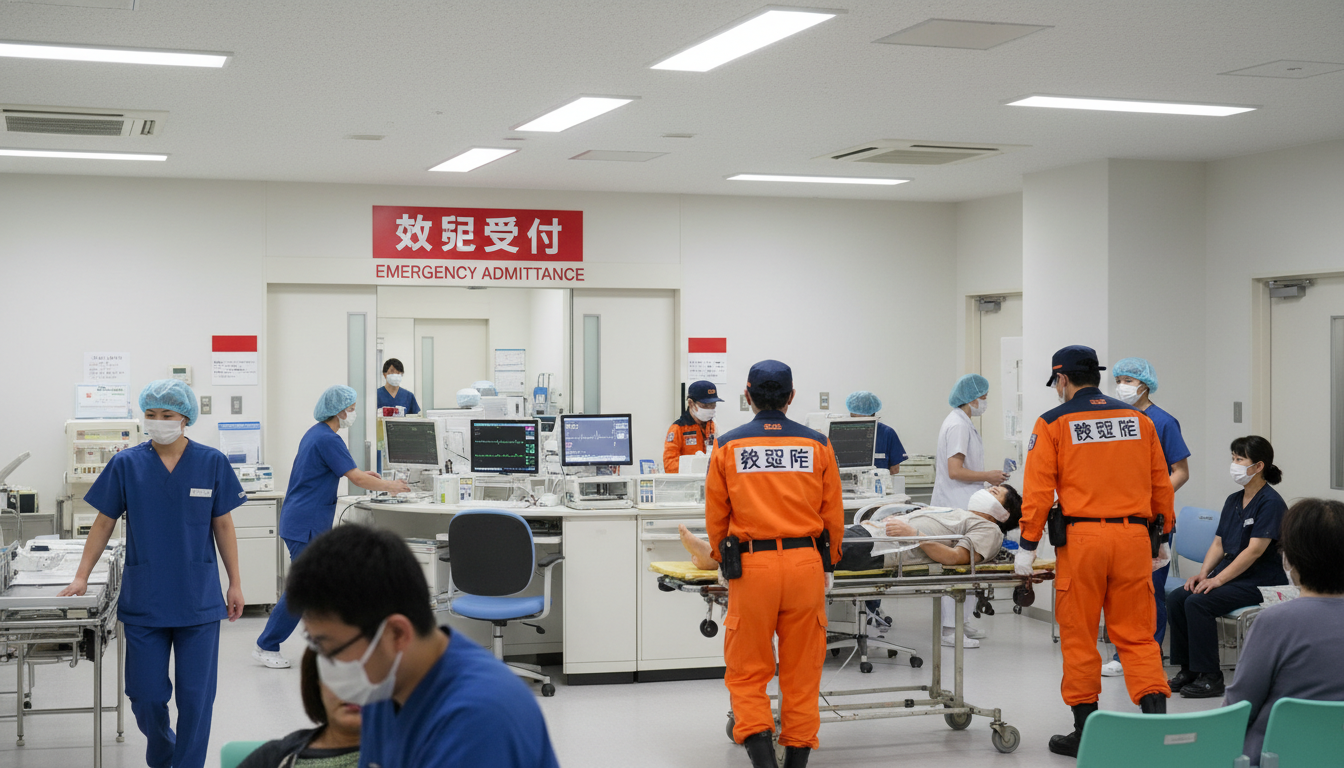
Why travel insurance is not enough on its own
Travel insurance is important. It can cover hospital bills, and many policies include a 24-hour assistance line that can help you find a hospital or arrange an interpreter by phone. However, insurance works mainly on money and logistics. It does not prepare the information a doctor needs to treat you safely.
| Situation | What insurance usually does | What it does not do |
|---|---|---|
| You need treatment | Pays or reimburses covered costs, subject to the policy terms | Explain your diagnoses, allergies and current medicines to a Japanese doctor |
| You arrive with medication | Nothing at customs | Check whether a medicine is allowed in Japan or prove why you carry it |
| You lose or run out of medicine | May reimburse some costs | Show a Japanese doctor exactly what you take, so it can be prescribed quickly |
| You have a pre-existing condition | Covers it only if the policy includes it | Cover a condition the policy excludes or that you did not declare |
In addition, the CHOICE travel insurance guide published on the Australian Government's Smartraveller website notes that insurers handle pre-existing conditions differently: some exclude them, some charge extra after a medical assessment, and some cover listed conditions automatically. Its advice is to declare your condition if in doubt.[5] In other words, travel insurance is not enough unless your policy actually covers your condition, and even then it cannot speak for you in the consultation room.
Why travel insurance is not enough: what the evidence shows
Official surveys and research point to the same gap between having insurance and being ready for care.
About 1 in 4 uninsured
In the agency's FY2023 visitor survey, about 73% of visitors had travel insurance. The uninsured mostly cited a short stay or confidence in their health. About 4% became ill or were injured during the trip.[1]
Few hospitals have a plan
Of 5,745 hospitals that responded to the health ministry's survey, 3.9% had a policy for accepting foreign patients and 5.4% had a foreign patient manual.[2]
App errors can harm
Google Translate rendered emergency discharge instructions accurately 92% of the time in Spanish and 81% in Chinese. About 2% and 8% of sentences could have caused significant harm.[6]
As a result, the safest assumption is that the hospital you reach may not have an interpreter or English forms ready. Translated documents in your bag reduce that risk, whether or not you have insurance.
Real use cases: when travel insurance is not enough
These scenarios come from the situations described on our real use cases page. In each one, the traveller could be fully insured and still face delays.
Older traveller runs out of medicine
An overseas prescription is not filled at a Japanese pharmacy. A clinic visit, repeat tests and a new prescription follow. A translated medication list and prescription copy make that visit faster.
ADHD medication
Some ADHD medicines are tightly controlled in Japan and some cannot be brought in at all. Insurance cannot fix this at the airport. Checking before travel can.
Insulin goes missing
When insulin is lost in transit, a doctor needs the exact product, strength and dose. Clear, translated documents decide how quickly a replacement is possible.
History of cancer
An emergency team needs to know about past treatment. Without a translated summary, triage and treatment decisions can be delayed.
Needles and sharps
Travellers using injections need to know in advance how to carry them and dispose of needles correctly in Japan.
Nobody speaks English
The patient is in pain and cannot explain symptoms. A written summary plus phone or in-person interpreting closes the gap.
Before you fly, confirm what your medicine is classed as in Japan. Our guide on how to bring medication to Japan explains the limits and the documents for each type.
Why a translation app is not enough in a medical emergency
Translation apps are useful for menus, directions and simple questions. In a medical setting, however, small errors matter. For example, in the 2019 JAMA Internal Medicine study, an instruction to hold (temporarily stop) a kidney medicine was translated into Chinese as an instruction to keep taking it. The researchers rated that error as life-threatening.[6]
Similarly, a 2021 study in the Journal of General Internal Medicine tested emergency department instructions in seven languages. Accuracy ranged from 94% in Spanish to 55% in Armenian, and the authors concluded the tool was not yet reliable for patient instructions.[7] Japanese was not among the languages tested, so there is no direct published rate for Japanese.
In addition, apps face practical limits in an emergency:
- brand names differ between countries, so an app may not recognise your medicine;
- doses, units and timing (mg vs mcg, twice daily vs every 12 hours) are easy to garble;
- a patient in pain, or an older person, may not be able to type or speak clearly;
- phones run out of battery, lose signal or are left behind in an ambulance.
Therefore, use apps for everyday conversation, but carry a human-checked translation of your key medical information. A doctor can read a one-page summary in seconds.

Older travellers: extra steps
For older travellers, travel insurance is not enough for an extra reason: they are more likely to take several regular medicines and to stay longer. The same Smartraveller guide notes that premiums and excesses often rise with age and that some conditions need a medical assessment before cover applies.[5] Before you go, therefore:
- Read the policy for your condition. Check age limits, declared conditions and the excess.
- Check the import limits. Without an Import Confirmation, the MHLW allows up to a 1-month supply of prescription medicines and up to a 2-month supply of other medicines.[3] To bring more than that, for example for a long stay, you need an Import Confirmation before you leave.
- List every medicine by generic name. Include strength, dose, timing and the reason for taking it, plus allergies.
- Give a copy to your travel companion. If you cannot speak for yourself, they can hand it to staff.
- Keep medicines in hand luggage in their original packaging, with the prescription copy.
In Japan, ask the pharmacy for an okusuri techō (medicine notebook) if you are prescribed anything. It keeps a running record that any Japanese doctor can read.
Travel insurance is not enough: what to prepare before you fly
Finally, here is a short checklist. Travel insurance is not enough on its own, but together with these documents it gives you real protection.
- Travel insurance policy number and 24-hour assistance number, saved offline
- One-page medical summary (conditions, surgeries, allergies), translated into Japanese
- Medication list with generic names, strengths and doses, translated into Japanese
- Copy of each prescription or a doctor's letter, translated where needed
- Medication check against Japan's rules, with an Import Confirmation if you exceed the limits
- Emergency numbers: 119 for ambulance and fire, and the JNTO Japan Visitor Hotline, 050-3816-2787 (24 hours, English, Chinese and Korean)[4]
For what to do if you need an ambulance, see our guide to calling 119 in Japan.
Do not risk it: get your medical documents ready
We translate prescriptions, doctors' letters, medication lists and medical summaries between Japanese and English and other languages, with human validation. Upload your documents and we confirm the price before any work begins.
- Price confirmed before work begins
- Human-validated medical translation
- Standard delivery from 72 hours
- Secure document process
We translate and coordinate; we do not give medical advice, sell insurance or decide insurance claims.
Frequently asked questions
Is travel insurance enough for a trip to Japan?
Travel insurance is important, but it is not enough on its own if you have a health condition or take regular medication. It helps with costs and assistance, but it does not tell a Japanese doctor your history or check that your medicine is allowed in Japan.
Does travel insurance cover pre-existing conditions?
It depends on the policy. Some insurers exclude pre-existing conditions, some cover them after a medical assessment and extra premium, and some cover listed conditions automatically. Declare your condition and read the policy before you travel.
Can I use a translation app instead of translated documents?
Use apps for everyday conversation, but not as your only tool for medical information. Studies of Google Translate found errors in medical instructions, some with the potential for serious harm. A human-checked translation of your summary and medication list is safer.
Which medical documents should I translate before travelling to Japan?
Start with a one-page medical summary, a medication list with generic names and doses, your allergies and a copy of each prescription or a doctor's letter. Translate full records only if a doctor asks for them.
How much medicine can I bring to Japan without extra paperwork?
Under MHLW rules, you can bring up to a 1-month supply of prescription medicines and up to a 2-month supply of other medicines without an Import Confirmation. Some medicines, such as certain ADHD and controlled medicines, have stricter rules or are banned.
What should older travellers prepare for Japan?
Check the policy for age limits and declared conditions, list every medicine by generic name and dose, apply for an Import Confirmation if you need more medicine than the limits allow, and give a translated copy of the documents to a travel companion.
This article provides general information reviewed on 6 October 2026. It is not medical, insurance or legal advice. Policy terms, exclusions and claim rules differ between insurers, and Japan's medication import rules can change, so confirm them with your insurer, your doctor and the MHLW before you travel. MedicTranslate translates documents and coordinates language support; it does not sell insurance, decide claims, give medical advice or guarantee customs approval.
- Japan Tourism Agency: Survey on medical care for international visitors (FY2023, published 28 June 2024)
- MHLW: Survey report on foreign patient acceptance at medical institutions (March 2026)
- MHLW: Bringing medicines into Japan for personal use
- JNTO: Japan Visitor Hotline
- Smartraveller (Australian Government, DFAT): CHOICE travel insurance buying guide, what are you covered for
- UCSF: Summary of Khoong et al., JAMA Internal Medicine (2019)
- Taira et al., A pragmatic assessment of Google Translate for emergency department instructions, J Gen Intern Med (2021)