
What Japanese Health Insurance Does Not Cover, and What You May Still Pay
Japanese health insurance covers a wide range of medically necessary treatment, but not every healthcare cost. However, health checks, preventive vaccinations, optional extras, documents and some treatments are charged separately, and the high-cost cap changed in August 2026.
Quick answer
Insurance covers treatment of illness and injury. However, it does not ordinarily cover health checks, preventive vaccinations, cosmetic treatment, normal pregnancy and childbirth, private-room charges and administrative documents. Even so, subsidies or separate benefits, such as the ¥500,000 childbirth lump sum, may still apply.
Need receipts or certificates for an overseas insurer or employer? We translate Japanese medical documents for international claims.
Translate my medical documentsOn this page
What Japanese health insurance usually covers
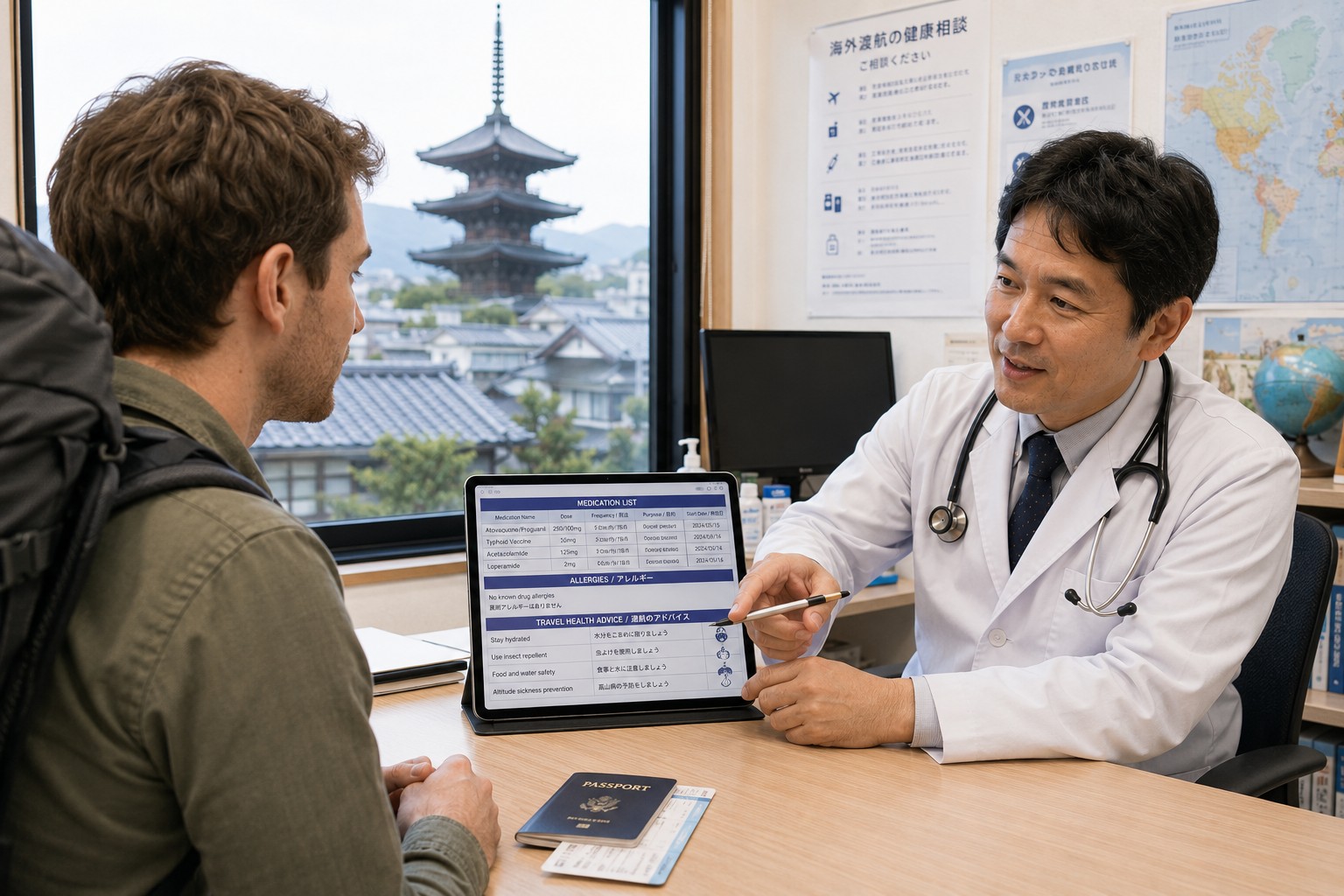
For insured treatment you pay a share of the nationally set fee. For example, under 70, the standard counter payment is 30%; children under school age and most people aged 70 to 74 pay 20%, and people 75 and over pay 10% to 30% depending on income.
Coverage depends on whether the service is insured treatment under the national fee schedule. As a result, the same clinic can offer insured and non-insured services, sometimes in one visit.
Common costs Japanese health insurance does not cover
Health checks and screening
Routine check-ups are outside treatment insurance, though employers and municipalities often fund or subsidise them.
Preventive vaccinations
These are outside treatment insurance; however, national or municipal programmes cover or subsidise particular vaccines.
Cosmetic treatment
Purely cosmetic procedures are not covered. However, exceptions exist where treatment is medically indicated.
Administrative documents
Similarly, medical certificates, insurer forms and record copies are charged separately from treatment.
Elective dental work
Premium materials, whitening, most implants and most orthodontics.
Large hospital without a referral
At least ¥7,000 extra for a first visit at specified large hospitals; many charge ¥7,700 including tax.
Private rooms: extras outside Japanese health insurance
You can receive insured treatment while also choosing an extra that insurance does not cover. For example, the most common is the private-room charge (差額ベッド代, sagaku beddo-dai).
The hospital must explain and get your agreement first. Under national rules, a private-room charge requires written consent after an explanation of the room and price. In addition, it should not be charged when the room is medically necessary or when the hospital places you there for its own reasons, such as full wards. The High-Cost Medical Expense cap also does not include private-room charges.
Therefore, before signing admission or room agreements, ask which costs are insured and which are optional. See Hospital admission in Japan for foreign patients.
Pregnancy and childbirth under Japanese health insurance
Under Japanese health insurance, normal pregnancy and childbirth are not treated as illness, so the delivery itself is not ordinary insured treatment. However, complications that need medical treatment are covered under the normal rules.
¥500,000 childbirth lump sum
Eligible insured members receive the childbirth lump-sum benefit (出産育児一時金), generally ¥500,000 per child, often paid directly to the maternity facility.
Standard childbirth coverage
An amended Health Insurance Act enacted on 29 May 2026 will cover standard childbirth costs at a nationally set price. It takes effect by June 2028; the date has not been set.
The Japanese health insurance cost cap changed in August 2026
The High-Cost Medical Expense Benefit (高額療養費) caps what you pay for insured treatment each month, based on age and income. MHLW revised it from August 2026, with new monthly limits and a new annual cap; a second stage from August 2027 adds finer income bands.
Older "about ¥80,000 a month" examples no longer apply. MHLW's example under the August 2026 rules: a person under 70 with annual income of about ¥3.7 to 5.1 million and ¥1 million of insured medical costs pays about ¥93,000. In addition, once the new annual cap is reached, further costs are refunded by your insurer.
For example, using a My Number Card registered for Japanese health insurance, and consenting to share limit information, lets the hospital apply your cap at the counter instead of you paying more and claiming it back.
Medical certificates, insurer forms and translation
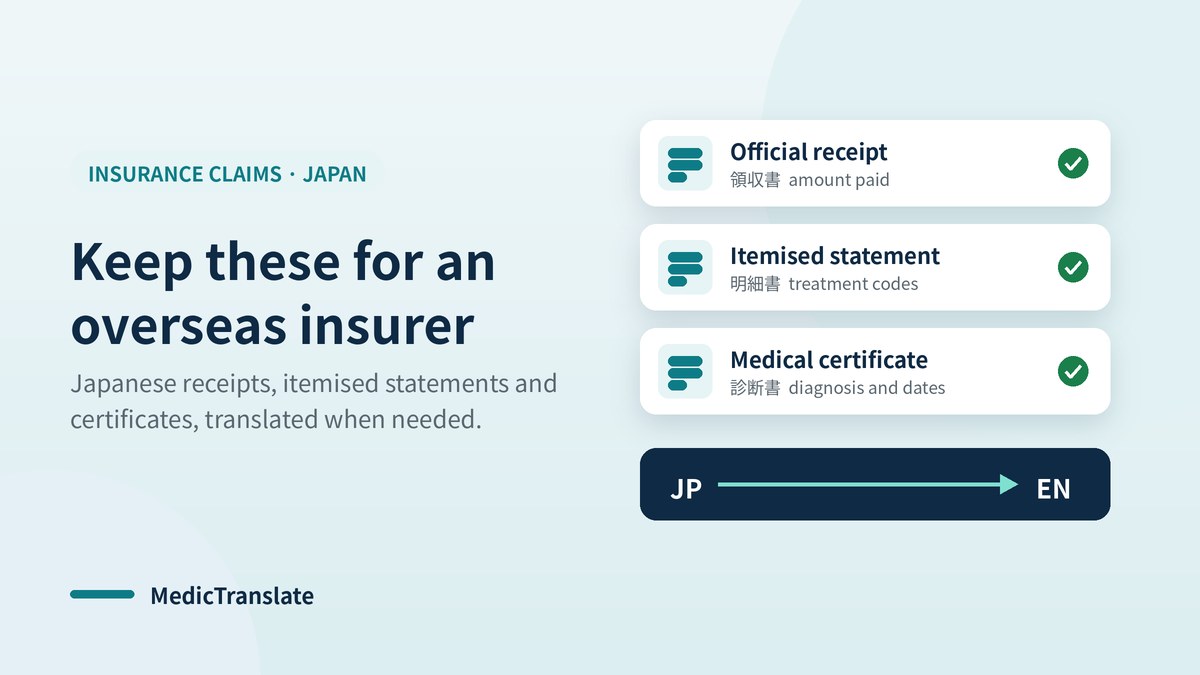
Documents are charged separately from treatment because Japanese health insurance does not cover them. As a result, if you need to claim from an overseas insurer or employer, keep itemised receipts (明細書), official receipts and any certificates, and check which language the receiving organisation needs.
Need Japanese medical documents translated?
MedicTranslate translates medical certificates, treatment summaries, itemised statements and other Japanese healthcare documents for overseas insurers, employers and doctors.
- Receipts and itemised statements for insurance claims
- Medical certificates and discharge summaries
- Certified translation, 72-hour standard turnaround
Quotes depend on document length and language pair, and requirements depend on the receiving organisation. Subject to the applicable terms.
Frequently asked questions
Does Japanese public health insurance cover everything?
No. It covers insured treatment for illness and injury. Preventive care, normal pregnancy and childbirth, cosmetic treatment, private rooms, documents and other extras are generally outside ordinary benefits.
Are health checks and vaccinations covered?
Not by treatment insurance, but employers, municipalities or public programmes often fund or subsidise them.
Are private hospital rooms covered?
No. The treatment is covered, but a private-room charge is extra and needs your written consent. It is not included in the High-Cost Medical Expense cap.
Is childbirth covered by Japanese health insurance?
Normal childbirth is not ordinary insured treatment, but eligible members receive a ¥500,000 lump sum per child. A law enacted in May 2026 will make standard childbirth free by June 2028; the start date has not been set.
How does the high-cost medical expense benefit work in 2026?
It caps your monthly insured costs by age and income. From August 2026 MHLW introduced new monthly limits and an annual cap. For example, a person under 70 earning about ¥3.7 to 5.1 million pays about ¥93,000 on ¥1 million of insured costs.
Do I pay extra at a large hospital without a referral?
Yes, at specified large hospitals: at least ¥7,000 for a first visit, and many charge ¥7,700 including tax. It is not covered by insurance.
This article provides general information reviewed on 28 September 2026. It is not insurance, legal or medical advice. Coverage, co-payments, high-cost limits, subsidies and facility charges depend on your circumstances and change, so confirm your entitlement with your insurer, municipality and provider. MedicTranslate provides translation and coordination services.
- MHLW: High-Cost Medical Expense Benefit, including the August 2026 revision (Japanese)
- MHLW: childbirth lump-sum benefit (Japanese)
- Hojyokin Portal: childbirth-cost law enacted 29 May 2026 (Japanese, secondary)
- Japan Health Insurance Association: medical benefits and co-payment rates (Japanese)
- MHLW: mixed insured and non-insured care, explanation and consent (Japanese)
- Hyogo Prefecture: private-room charges explained (Japanese)
- MHLW: charges for first visits without a referral (Japanese)